Showing posts with label Grow Home. Show all posts

Tuesday, January 12, 2016

The Impact Factor’s 2015 Game of the Year Awards!
Article, Part 1 of 2
2015 has been an absolutely phenomenal year for games. We’ve had stellar AAA games years in the making, surprise indies that wowed, and small artistic experiences that brought something new to the world of gaming. It’s also probably my busiest year ever as a gamer. I jumped between my computer, phone, Vita, 3DS, PS3 and PS4. I played nearly 60 games total. Starting The Impact Factor back in January was a huge inspiration to sit down to play anything and everything that not only caught my eye, but the critical eyes of others too. 2015 is the year current generation consoles became a must buy. Welcome to The Impact Factor’s game of the year awards for 2015! Strap in.

It’s a real treat to once again list my favorite, and the best, games of the year. After all, making a game of the year (GOTY) list was how I started The Impact Factor. What was five last year is twelve this year. I’m sorry. I just can’t narrow it down to the standard list of ten. Believe me, I tried. The games in the #12 and #11 slots are just too good to not be represented here today.

As a scientist first and games writer/podcaster/streamer second, I’m all about full disclosure to my audience. To address the first and most pressing question: no, I was not able to play literally every single game that came out in 2015. You may notice some big exclusions, or games that made it onto many other GOTY lists.  By virtue of me actually trying to complete my Ph.D. in a non-Rip Van Winkle-esque timeline, I just can’t get around to playing all the games I want to. My list, like all lists really, are a collection of the games I thought were the best this year. My favorites. All GOTY lists are subjective and given how many exceptional games came out this year, it should come as no surprise that lists this year were so varied. So I suppose I should include an asterisk in this article’s title that reads: *based on an incomplete sampling. You can see all games that I ‘sampled’ below.
This year was the first I could share my GOTY list in more than written form! The Impact Factor podcast just recorded its GOTY talk, in which I go into more detail about my top five favorites of the year. You can find the episode below.

But without further ado, let’s get into The Impact Factor’s top 12 games of 2015! 12-7 are today, honorable mention and 6-1 tomorrow!

12. Grow Home


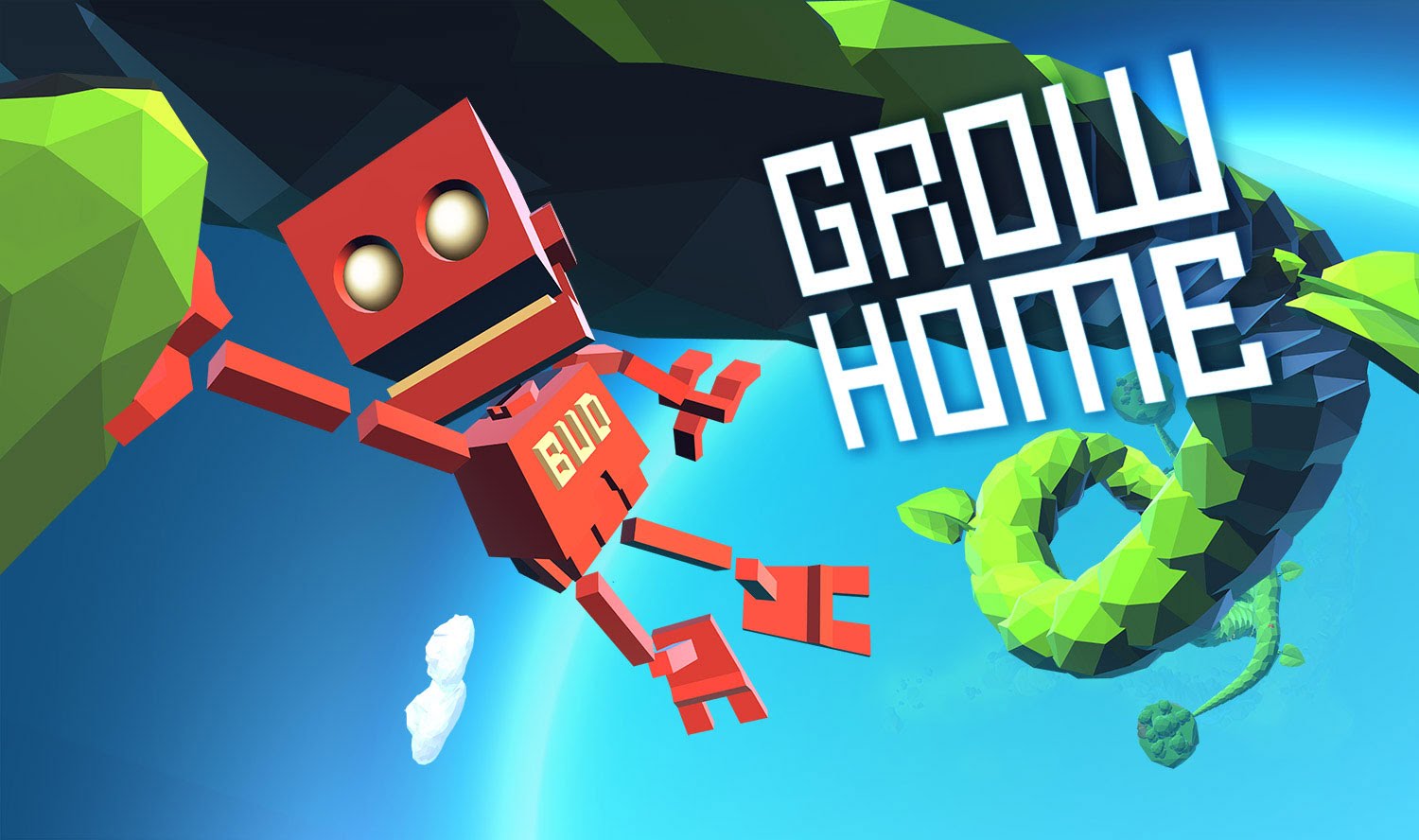
3D platformers are few and far between nowadays, but Grow Home gets it so right. The game is charming, whimsical, atmospheric, and fun. I finished Grow Home over the course of one night & the following morning because I couldn’t stop playing. Grow Home nails floaty physics, contrasting the powerful pull of growing large vines with the lightness and clumsiness of your lovable little robot. 2015 is the first year I can quote myself about just how much I enjoyed some of the games on this list, so I’ll let my review’s summary do the rest of the work here: “Grow Home is an unmissable experience in gaming. My time with the game was awe-inspiring and meditative. A beautiful world complements your simple objective—to fill a planet with life. Climbing your way through a growing world creates a tremendous sense of player impact. Unusual physics and controls set the foundation for creating a compelling bond between the player and the game’s robot avatar, B.U.D., the more you play. Grow Home is a game that understands what it wants to be and shows players total respect. Grow Home is a perfect, compact experience deserving of your time.” You can read my full review of Grow Home for more about what makes the game so great.

11. Life is Strange


Life is Strange does a remarkable, and almost unprecedented, job of making the ordinary extraordinary. You live the life of a teenage girl discovering who matters most in her life, who she is, and who she wants to be. With a bit of supernatural elements added into the mix to amp up the drama. To summarize it briefly: you play as Max, a senior at a high school for the arts, who discovers she can manipulate time. She uses her newly found powers to reinforce, or erode, her social bonds. More importantly, though, it’s about rebuilding her time worn friendship to her childhood bestie, Chloe. What’s most impressive and engaging about Life is Strange is its depiction of normal life. The coming of age in during a trying time and about the complicated nature of making meaningful connections. Life is Strange runs the gamut of big dramatic moments, like drug abuse and suicide, but it’s groundedness (and humanness) make its dramatic flairs feel earned. Over the course of the five episodes I grew so attached to Max and Chloe. I did everything in my power to keep the two happy and healthy, because they deserved it. A few instances of clunky dialogue aside, Life is Strange excels in every way. I loved seeing another studio, DotNod, take a shot at a genre that Telltale had seemingly monopolized. And do it so incredibly skillfully. Life is Strange was another of 2015’s big surprises.

10. Persona 4: Dancing All Night


The surprises keep rolling with Persona 4: Dancing All Night (P4D). At the start of 2015 I would have scoffed at the idea that I’d care about a rhythm slash visual novel hybrid game based off a JRPG franchise I’d never played before. Let alone that it makes my top ten of the year. But here we are, and P4D is my number ten favorite game of 2015. I was blown away by Persona 4 Golden earlier this year, and it created an insatiable hunger for more. P4D sated that hunger, surprisingly, and stood out as it’s own fantastic game. P4D does everything well. The visual novel elements are well-written, funny, and feature great animated character models (a big deal for a visual novel game). The rhythm elements are even better. Motion-captured dancers move through interesting backgrounds, songs are instantly catchy and infinitely repeatable, and the inputs are simple yet mask a complexity that appears at higher difficulty levels. The Persona team does not make bad spin-offs. Perhaps most powerfully, P4D is a game that my fiancée played while I watched. Playing through P4D with her is one of my favorite gaming memories from 2015, easily cementing the game’s placement in my top ten list. I’ll let my own words wrap this up, “ P4D exudes design confidence, showing that Atlas not only knows its world, but knows how to perfectly expand upon it. I expected P4D but to be fun, but not great. Turns out it’s exceptional.”

9. Until Dawn


Until Dawn is the best realization of a long-promised notion in games: that your choice matters and affects the outcome of the story. What an exceptional surprise and a devilishly fun game. Until Dawn had everything going against it: a troubled development (it started as a PS3 Move game over five years ago), a formulaic plot (teen slasher / supernatural horror set in a cabin in the woods), and released with almost no fanfare. As a big fan of both horror and adventure games, I had to see what Until Dawn had to offer. I was blown away. Until Dawn is so freaking fun. The characters are shallow and tropey, but knowingly so. Voice acting is exceptional. The story takes twists and turns that easily carry you through the 10 hour experience. You’re in a constant state of fear, not only because of the monsters lurking in the shadows, but knowing that every choice you make could result in the permanent death of one of the game’s protagonists. You can beat Until Dawn with everyone alive, no one alive, or anywhere in between. Until Dawn does new and interesting things with adventure game control schemes too, namely the ‘don’t move’ prompt that requires you to keep your controller perfectly still during some of the game’s most tense moments. Until Dawn is a great solo experience, was a great co-op story experience for my fiancée and I, and would also be an exceptional party game. Until Dawn is the game form of yelling at the screen during a B-horror movie: do you run or try to hide from the masked intruder? And so on. Until Dawn was another of 2015’s great surprises and easily one of the best games this year.

8. Monster Hunter 4 Ultimate


Well, here it is. The game I promised to review since March. The game I never got around to reviewing. So this will have to suffice. Monster Hunter 4 Ultimate (MH4U) is exceptional. MH4U was my first foray into the long running Monster Hunter franchise. A franchise that, while limited to a small (but passionate) following in the west, is routinely one of the biggest games in Japan. The game boils down to a couple disparate parts. You travel out into a multi-zoned map to track, find, and kill gigantic monsters to complete quests. Killing said monsters awards you with monster parts, which can be used to craft new armor and weapons. There’s a loose story, but MH4U is all about killing big things with big swords (or axes, in my case). MH4U is impressively complex and almost unfathomably content dense. Killing your targets is never a button mash fest—it’s the exact opposite. Killing these giant monsters requires problem solving, pattern recognition, and quick reflexes. Your attacks are slow, monsters do a ton of damage, and they have a large health pool. Each new fight is a puzzle, one in which your life is on the line. Combat is therefore deliberate and tense. Enemy design is great, too. MH4U is an RPG fanatic’s dream, with a wealth of systems to master, each with immense complexity. The game is also like 8+ games in one, as each weapon type makes monster encounters feel totally different. Fighting with a sword and shield is nothing like fighting with a switch axe, a bow gun, or a hammer. They each require their own skill set and approach. I played MH4U for 80+ hours and I got maybe halfway through the content. That’s if I’m being generous. MH4U took me completely by surprise. And as I’ve read online, as the most accessible Monster Hunter yet it’s a perfect place for newcomers like me to jump on board. Just writing this makes me want to pick it up again. Dangit.

7. Tales from the Borderlands


Tales from the Borderlands is the little game that could. It had a lot to prove from the outset: how could Telltale make a game set in the Borderlands universe? It also had some pretty lofty expectations to overcome. As a big fan of both Telltale and the Borderlands IP, this unusual pairing was very much a peanut butter in my chocolate kind of scenario. But I was skeptical. Tales from the Borderlands delighted in proving me wrong. The game is one of the year’s best (duh), one of the year’s funniest, and Telltale’s second best game ever (just behind The Walking Dead S1). If I were to make a list of my favorite new characters from 2015, Tales from the Borderlands would easily secure upwards of four to five slots on a top ten. Letting me speak for myself here, “Tales from the Borderlands is fresh and exciting. Telltale flourishes in their return to comedic storytelling. Original characters feel at home in the Borderlands universe and are some of the best Telltale has ever done. The writing is sharp, witty, and often laugh-out-loud funny. Decisions made in Tales from the Borderlands feel meaningful, both within the game’s self-contained plot and in the Borderlands universe at large. Tales from the Borderlands is a wild ride and a raucously good time.” Telltale also plays with their own game conventions in Tales from the Borderlands, freshening up the play experience for the first time since The Walking Dead. Fan of Borderlands or not, Tales from the Borderlands is a must play. You can check out my full thoughts on the game in my review.

Check back here tomorrow for a couple honorable mentions and #6-1!

Friday, September 18, 2015

The Impact Factor Ep. 20: Only 90s Kids Will Get This
Podcast

Welcome to the landmark 20th episode of The Impact Factor! The Impact Factor is what happens when two scientists, and two best friends, get together to talk about video games. Hosts Alex Samocha [biomedical scientist] and Charles Fliss [social scientist] sit down every week to discuss the week in gaming! Listen in for the news, views, and games that made the biggest impact!
Please send your suggestions and feedback to: impactfactorpodcast@gmail.com

In this episode Alex and Fliss talk about the Tokyo Game Show, Persona 5, Bloodborne, Dark Souls 3, Nintendo, Kingdom Hearts, Street Fighter V, DOTA2, Danganronpa, Super Time Force Ultra & more!


For articles and reviews from Alex, check out http://www.theimpactfactor.blogspot.com

For a blog about Japan, pop culture & more from Fliss, check out http://www.flissofthenorthstar.blogspot.com

For an archive of old episodes, visit our YouTube page: https://www.youtube.com/channel/UC_zpRq6h1O7d2MlMYWhNNjw

Follow Alex @alexsamocha on Twitter.
Follow Fliss @thecfliss on Twitter.

Intro song:
You Kill My Brother by Go! Go! Go! Micro Invasion, East Jakarta Chiptunes Compilations. Freemusic Archive. (Attribution Noncommercial Share-Alike License)
freemusicarchive.org/music/Indonesi…s_Compilation/
Transitions:
News & Views and Perspectives transitions from victorcenusa, Freesound.org (Creative Commons 0 License)
freesound.org/people/victorcenusa/sounds/148785/
freesound.org/people/victorcenusa/sounds/148784/
Experimental Methods transition from Sentuniman, Freesound.org (Attribution Noncommercial License)
freesound.org/people/Setuniman/sounds/143994/

Tuesday, September 15, 2015

M.O.M. Would Be Proud
Review
Grow Home, Ubisoft Reflections

Abstract: Grow Home is an unmissable experience in gaming. My time with the game was awe-inspiring and meditative. A beautiful world complements your simple objective—to fill a planet with life. Climbing your way through a growing world creates a tremendous sense of player impact. Unusual physics and controls set the foundation for creating a compelling bond between the player and the game’s robot avatar, B.U.D., the more you play. Grow Home is a game that understands what it wants to be and shows players total respect. Grow Home is a perfect, compact experience deserving of your time.

Let me take you back to an anecdote I described on The Impact Factor podcast. I stood on the precipice of floating cliff face. The ground was lightly peppered with white, as the cool air of my current altitude created a light misting of snow. I looked out into the empty and expansive night sky, its royal blues and cosmic purples giving way to orange and yellow and red. The night was coming to an end. I could see the morning sun begin to peek over the curved horizon. In an instant I leapt from my location, free falling past rocks and floating waterfalls as I made my descent to sea level. A last moment release of my flower petal parachute let me touch gently onto to wave-whipped sands. I made my descent for a reason. I guide my gaze directly upwards—I wanted to see my work. Above me was an elegant tapestry of my own creation. Star stalks carved lines into the sky, interlocking and weaving to form an elaborate web. A space that was once empty is now a visual history of my actions. This moment, among many others, made me realize that Grow Home is phenomenal.
I was not exaggerating. Grow Home is gorgeous.
Poetic introductions aside, Grow Home is a game that took me completely by surprise. It took me on a journey. The game came out of Ubisoft Reflections, a small development studio within the larger Ubisoft umbrella. Grow Home came out early 2015 on the PC and just made its way to PS4 this month. I had been wanting to give the game a go since its initial release, but once it became clear that Grow Home would win the PlayStation Plus vote I knew the first game I would play in September.

In Grow Home you play as B.U.D., short for botanical utility droid. B.U.D. is a clumsy little robot, moving in awkward sputters and with slow, short jumps. At the start of the game your spaceship’s AI, M.O.M., informs you that you have one task—oxygenate your world. This is accomplished by growing a giant Star Plant you find at the start of the game. Growing the central stalk is simple. B.U.D. must ascend the Star Plant to look for blooms. Grabbing onto those with your little robot causes them to explode with movement and life. Sprouts shoot from the blooms, working their way into the empty sky. You need to corral the outgrowths towards fluorescently illuminated floating geography and embed them deep into the rock face. Each connection you make causes the central stalk to rise, creating new blooms and spring board-like leaves along the way. Once the plant grows to a height of 2000m a flower will bloom, allowing you to harvest the ever-crucial Star Seeds and complete the game.

Growing your Star Plant is a refreshing, meditative experience. Each new bloom is story: the one that just fell short of your intended location, the one with the mind of its own that forced its way downward towards the ocean, and the one that formed a perfect corkscrew. The further you get into the game, the more you can see the impact of your actions. The entire world is rendered at all times, so each new sprout adds to the growing latticework that cuts its way into the sky.
That's a whole lot of stories. With many more to come as you get higher and higher up.
The gameplay in Grow Home can be divided into two main mechanics: platforming and climbing. B.U.D.’s mobility starts simple, limited to jumping and climbing. Working your way up the Star Plant and towards blooms is a waltz of climbing and jumping, to and around leaves and trees and cliffs. A lot of your gameplay revolves around B.U.D.’s grasping mechanic. Each hand can grab onto objects separately. Alternating hand holds allows your robot to climb, which is central in your lengthy ascent. Falling is frequent, at first, as you like B.U.D. work to understand the world you’ve been dropped into. To mitigate frustrations, not only are teleporters scattered throughout the map, but small flowers can be collected and deployed as a  parachute slash glider. Everything synergizes to create a compelling gameplay package that easily carries you throughout the roughly 3-hour completion time.
Climbing will get you where you need to go.
Grow Home is a ferry, escorting the player into a new reality. You are an explorer, the first explorer, of an untouched planet. The world feels hollow, initially, a wide open playground in which B.U.D. will explore. The minimal geology, flora and fauna all have a sense of purpose, though. Everything fits. And the work done by the Ubisoft Reflections team to create a world you want to spend your time in is incredible. Grow Home’s planet is filled with wonderful ambient noises, melodic whistles of winds and the quiet hum of space. The emptiness of the world helps to bolster the resonance of all player actions. Every jump, plant growth, or B.U.D’s little bleeps or bloops echoes loudly—reinforcing once again that you have full ownership of your surroundings. The blankness of your surroundings acts as the perfect canvas. Your exploration is complemented by a soothing soundtrack that was so good I went out and bought it. It creates a perfect background for just about anything.
The empty space is yours to control. 
When I first started my time with Grow Home I really expected to dislike the controls. Aside from the (preposterous) critique that the game was too short, control wonkiness was the second most common complaint among reviewers. For the first 10-15 minutes or so, I thought the reviews were right on the money. Controlling B.U.D. was awkward. He felt slow and floaty, would slip around when trying to run, and often had trouble grasping onto surfaces. As I spent just a bit more time with the game, however, I developed a growing (sorry for the pun) sense of familiarity with the goofy little robot. It clicked. I began to understand his limits, his jump height, how to position his hands to climb lighting fast, how far his jet propulsion could take me, how to counter his momentum when landing after a rapid descent. It worked to create a sense of connection with B.U.D. As he grew in confidence, growing the Star Plant closer to space, so too did I grow in my mastery of his controls. I went from barely being able to jump from platform to platform, to catching and collecting a falling leaf while free falling, only to deploy it to glide comfortably to safety. My growth was exhilarating. Using a unique control scheme do create a bond with your protagonist is a powerful tool unique to games, and on that is painfully underutilized. I’m amazed at how expertly Grow Home executes its inclusion in game.
Video evidence of my skills. I'm basically a secret agent.

Above all, I really enjoyed how much Grow Home respects the player. Grow Home is perfectly simple. A straightforward control scheme embodies the notion of “easy to learn, difficult to master,” one of the best principles in game design. Grow Home’s sandbox gives the players the ability to do whatever they want. Exploration is rewarded, but it's totally optional. The games quiet and contemplative tone can appeal to anyone looking to have an immersive experience into a beautiful world. Small collection quests, like the shimmering crystals or teleporter scans of wildlife, offer completionist gamers an avenue for a more content dense experience. Grow Home can be completed in roughly 3 hours on your first run which, to me, shows a deep respect for the player’s time and attention. It is a perfect, compact experience. Grow Home brings you into a new and interesting world, shows you astounding sights, develops a bond between you and B.U.D., and then leaves you satisfied. Overstay its welcome, Grow Home does not.
Blooming the Star Plant is the end. Or maybe just a new beginning?
Grow Home is a remarkable success, exuding confidence and competence in all aspects. Grow Home is perhaps the biggest surprise of the year in that it delivered something I never knew how much I needed. I still find myself hopping into the game every once in a while, just to be brought back to my first time exploring and filling out it’s great world. Grow Home is a must play, a game I cannot recommend highly enough. Home is where the heart is.

Grow Home
5/5

Friday, September 11, 2015

The Impact Factor Ep. 19: Krampusing My Style
Podcast

Welcome to the 19th episode of The Impact Factor! The Impact Factor is what happens when two scientists, and two best friends, get together to talk about video games. Hosts Alex Samocha [biomedical scientist] and Charles Fliss [social scientist] sit down every week to discuss the week in gaming! Listen in for the news, views, and games that made the biggest impact!

Please send your suggestions and feedback to impactfactorpodcast@gmail.com

In this episode Alex and Fliss talk about Heroes of the Storm, Apple TV, Xbox Live Indie Games Marketplace, Metal Gear Solid V, Kingdom Hearts 2.9, Persona 5, Grow Home, CodeCombat and more!

Subscribe to us on iTunes: itunes.apple.com/us/podcast/the-i…id993404882?mt=2
For articles and reviews from Alex, check out: www.theimpactfactor.blogspot.com
For a blog about Japan, pop culture & more from Fliss, check out:www.flissofthenorthstar.blogspot.com

For an archive of old episodes, visit our YouTube page:www.youtube.com/channel/UC_zpRq6h1O7d2MlMYWhNNjw 

Follow Alex @alexsamocha on Twitter.
Follow Fliss @thecfliss on Twitter.

Intro song:
You Kill My Brother by Go! Go! Go! Micro Invasion, East Jakarta Chiptunes Compilations. Freemusic Archive. (Attribution Noncommercial Share-Alike License)
freemusicarchive.org/music/Indonesi…s_Compilation/
Transitions:
News & Views and Perspectives transitions from victorcenusa, Freesound.org (Creative Commons 0 License)
freesound.org/people/victorcenusa/sounds/148785/
freesound.org/people/victorcenusa/sounds/148784/
Experimental Methods transition from Sentuniman, Freesound.org (Attribution Noncommercial License)
freesound.org/people/Setuniman/sounds/143994/