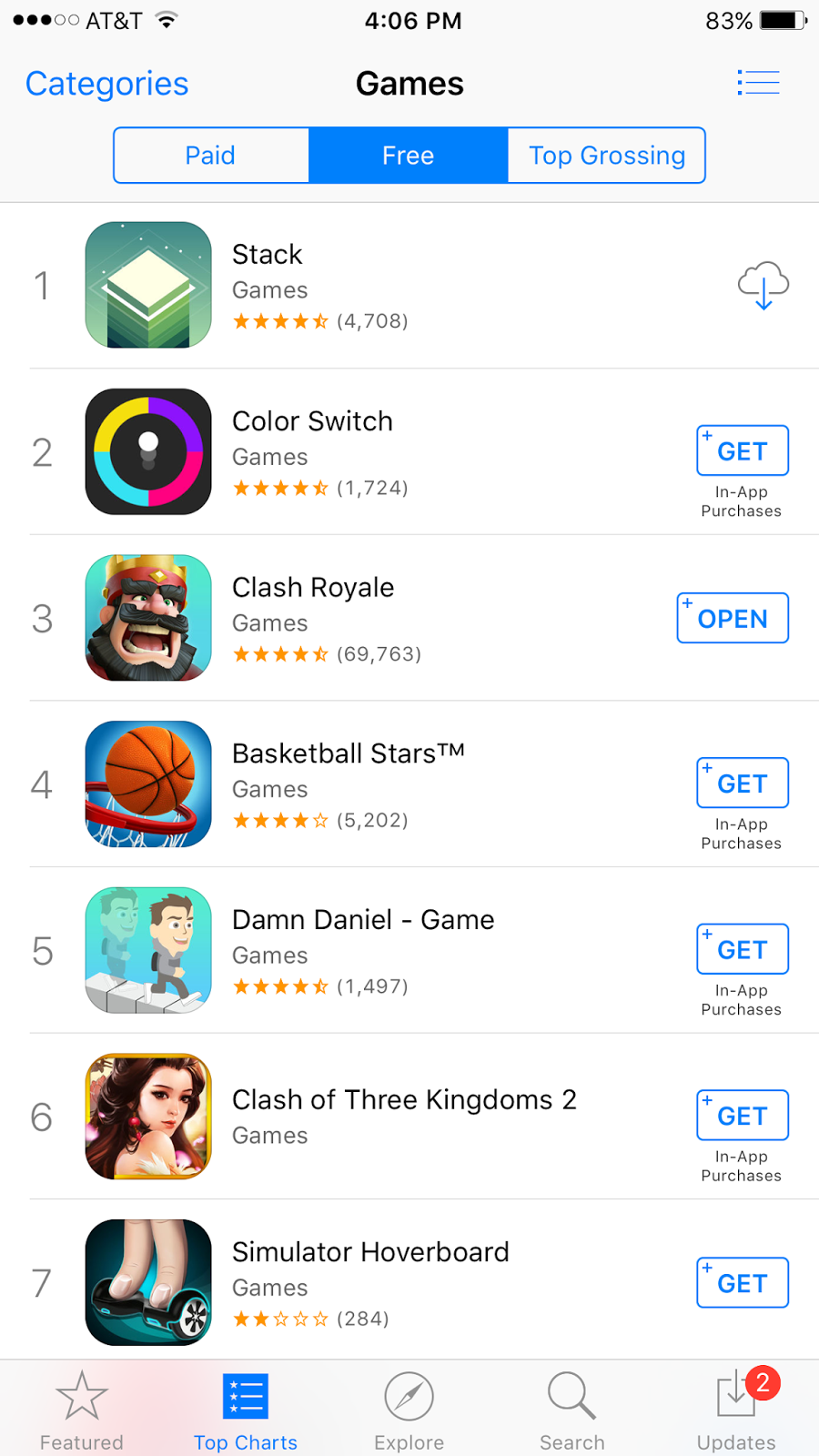
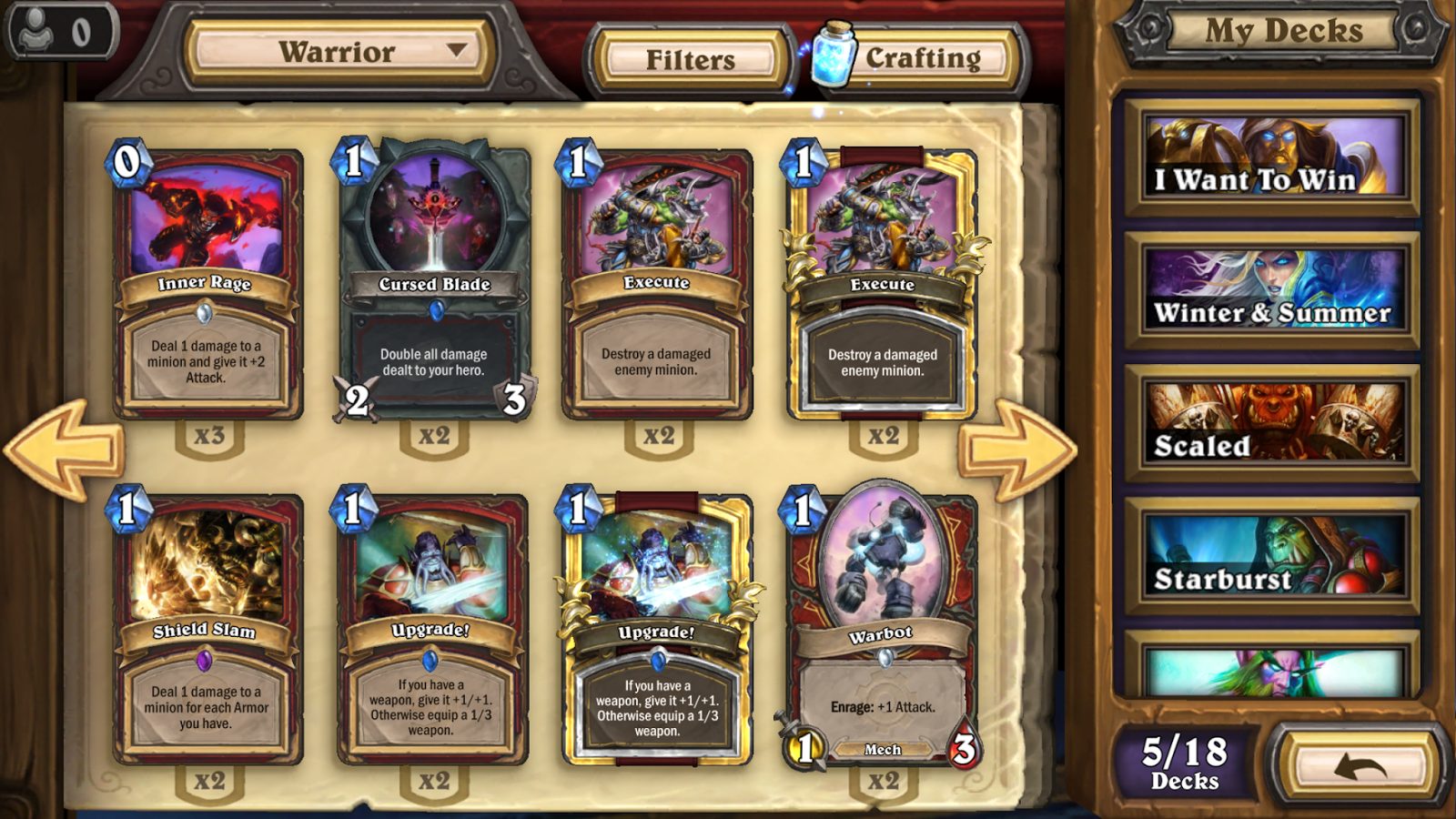
Showing posts with label Clash Royale. Show all posts

Friday, September 23, 2016

The Impact Factor Ep. 73: Video Games Worth Living In
Podcast
Welcome to the 73rd episode of The Impact Factor! The Impact Factor is what happens when two scientists, and two best friends, get together to talk about video games. Hosts Alex Samocha [biomedical scientist] and Charles Fliss [social scientist] sit down every week to discuss the week in gaming! Listen in for the news, views, and games that made the biggest impact!

Please send your suggestions and feedback to: impactfactorpodcast@gmail.com

In this episode Alex and Fliss talk about Berserk, Persona 5, From Software, Armored Core, Pokemon, Clash Royale, our listeners’ shame games, 5 great games for newcomers, video game worlds we want to live in, Severed and much more!


YouTube page

For articles and reviews from Alex, check out: www.theimpactfactor.blogspot.com

Follow Alex @alexsamocha on Twitter. twitch.tv/megalodonphd
Follow Fliss 
@thecfliss on Twitter.

Intro song:
You Kill My Brother by Go! Go! Go! Micro Invasion, East Jakarta Chiptunes Compilations. Freemusic Archive. (Attribution Noncommercial Share-Alike License)
Transitions:
News & Views and Perspectives transitions from victorcenusa, Freesound.org (Creative Commons 0 License)
Experimental Methods transition from Sentuniman, Freesound.org (Attribution Noncommercial License)

Tuesday, September 20, 2016

Happy With A Habit: Finding Fuel From Lifestyle Games
Perspectives


This past Friday was slow, painfully slow. Like a mule that’s dug its heels deep into the dirt, it was a Friday almost sentient and malicious, knowing full well that the weekend was only a few hours away. I ran an experiment that went predictably awry and had mundane conversations about weekend plans. Throughout the rest of the week, reading news about video games helps to fill in duller spats. Fridays are a serious offender, however, as little to nothing of value gets published. This Friday IGN ran a story about how to make a Pokemon GO accessory work. Polygon ran yet another piece about how the PC version of a new game (BioShock Remastered) is shoddy. But I did have something to be excited about. I had something to fuel the rest of my day. In fact, it’s something that is a constant source of energy from which I can draw, a font that never dries up—lifestyle games.

Because you see, Clash Royale was about to get a big update. Friday meant the announcement of a ton of quality of life changes. New chests were being added to the game that would give players better chances at Epic and Legendary cards. Special offers were being added to the shop to give big payouts for a small cost. Tournaments were about to be restructured entirely, giving players the chance to play whenever they want. Four new cards are slated for addition to the game, including the cool looking Mega Minion. While waiting for an experiment to finish I sat transfixed to Clash Royale’s subreddit, eager to learn as much as I could about this Monday 9/19 update. I was energized.

Clash Royale's update got me all kinds of excited.
Like they always do.
No, Clash Royale isn’t a new game. Far from it. I’ve been playing this smartphone title since it first launched in March. I have even taken the time to share my thoughts about the game in review form here on the blog. This competitive deck-based real time strategy tower defense game has joined a small suite of titles that accompany me through day-to-day life. Clash Royale, Hearthstone, and Overwatch are the three games that, despite new releases and new announcements, exist at the forefront of my gaming time. The three are also lifestyle games.

Lifestyle games are living products. Official release is only the beginning of their existence as a consumer good. Lifestyle games offer a constant but evolving play experience that’s designed to keep people like me playing for months, if not years. They receive regular updates that shake up the ways in which players engage. That can manifest in a couple different ways, but generally through the addition of new modes and new playable content (like cards in Hearthstone or heroes in Overwatch). Lifestyle games come in all shapes and sizes. Most MOBAs, like League of Legends or DOTA2, are lifestyle games. Digital card games like TES: Legends fit the description, too. Most smartphone games have at least some shades of lifestyle elements, like Puzzle and Dragons or Kingdom Hearts Unchained X. Regardless of the genre they come in, lifestyle games are tailor made to keep you invested.

If it talks like or walks like a lifestyle game, it probably is.
For me, lifestyle games must also provide enjoyment in relatively small bursts. Unlike an open-world RPG or a AAA narrative title, lifestyle games can be (satisfyingly) played in half an hour or less. In the case of Clash Royale or Hearthstone, sometimes even fewer than 10 minutes. The lifestyle games that have gripped me have done so through exemplary design and an addictive gameplay loop. They reward, and spotlight, progress as you invest more of your time into them. It has been fantastic seeing my Hearthstone card collection grow and my Clash Royale levels rise. Skill ranks in all three of my lifestyle games show me that my play hasn’t gone unnoticed and that I’ve made it high up the ladder. My lifestyle games give me something to do when I get a few moments to spare while simultaneously being compelling enough on their own to warrant long, dedicated play sessions.

Hearthstone and Overwatch and Clash Royale are far more than a time killer – they are fuel. The real reason I’ve become so enamored with lifestyle games isn’t the availability or the dynamism of play, it is the narrative of how they are changing over time. It is the stories behind additions or the retooling of the play experience. It is so satisfying to be deep into the strategies and issues facing these lifestyle games and watch how the developers steer the ship in the right direction. I love to be involved in conversations not just about gameplay, but about game design. My play experience in a lifestyle game in small part contributes to the future of the game for everyone. Abusing an overpowered character in Overwatch with others in the community can drive changes to their abilities. Discovering a deck that counters popular strategies in Clash Royale is me engaging with a much larger discussion. In a way it is like watching a game grow up, which is something I’ve never experienced before.
 
Simply playing Hearthstone or other lifestyle games involves me
 in the conversation about their development. That's super cool.
Lifestyle games also help to fill in the quiet times of an industry I love to follow. Whether it is the end of a week, the middle of summer, or the weeks between major trade shows, news about video games can dip quite a bit. It’s a cycle, and one that undulates pretty dramatically. My lifestyle games are constantly changing, which provides a near endless font of excitement to draw from. Just last month Hearthstone released the One Night In Karazhan expansion that brought with it a bevy of fun boss fights and over 40 new cards that have changed the way I play in all game modes (& will continue to in the weeks to come). Clash Royale just got a massive update yesterday and I still have four new cards to look forward to over the next six weeks. Overwatch just began its second competitive season that has me clamoring for Diamond rank. Before that, it was a blast playing the time-limited Rocket League­-esque Lucioball in the Summer Games, and my excitement is still high as Blizzard has been cryptically teasing the game’s next character, Sombra, for weeks now. Playing, but even just following, these lifestyle games provides a constant drip feed of new and exciting that makes every week in gaming feel like an adventure.

QiuƩn es Somba?

Whether it is playing, following or talking about them, I’m happy with my lifestyle game habit. Hearthstone, Clash Royale and Overwatch have all given me more than their fair share and there is no sign of them stopping anytime soon. Some habits are worth having. Goodbye doldrums.  

Friday, July 8, 2016

The Impact Factor Ep. 62: Counter-Strike Gambling Offensive
Podcast
Welcome to the 62nd episode of The Impact Factor! The Impact Factor is what happens when two scientists, and two best friends, get together to talk about video games. Hosts Alex Samocha [biomedical scientist] and Charles Fliss [social scientist] sit down every week to discuss the week in gaming! Listen in for the news, views, and games that made the biggest impact!

Please send your suggestions and feedback to: impactfactorpodcast@gmail.com

In this episode Alex and Fliss talk about Bum Rush, EVO, Street Fighter V, Fig, E3, Pokemon GO, PS VR, Overwatch, System Shock, CSGO gambling, Clash Royale, Danganronpa 2 & much more!

Counter-Strike Global Offensive Underage Gambling Suit


YouTube page

For articles and reviews from Alex, check out: www.theimpactfactor.blogspot.com
For a blog about Japan, pop culture & more from Fliss, check out:

Follow Alex @alexsamocha on Twitter. twitch.tv/megalodonphd
Follow Fliss 
@thecfliss on Twitter. twitch.tv/flissofthenorthstar

Intro song:
You Kill My Brother by Go! Go! Go! Micro Invasion, East Jakarta Chiptunes Compilations. Freemusic Archive. (Attribution Noncommercial Share-Alike License)
Transitions:
News & Views and Perspectives transitions from victorcenusa, Freesound.org (Creative Commons 0 License)
Experimental Methods transition from Sentuniman, Freesound.org (Attribution Noncommercial License)

Friday, May 20, 2016

The Impact Factor Ep. 55: Uncharted Game Dev Territory
Podcast
Welcome to the 55th episode of The Impact Factor! The Impact Factor is what happens when two scientists, and two best friends, get together to talk about video games. Hosts Alex Samocha [biomedical scientist] and Charles Fliss [social scientist] sit down every week to discuss the week in gaming! Listen in for the news, views, and games that made the biggest impact!

Please send your suggestions and feedback to: impactfactorpodcast@gmail.com

In this episode Alex and Fliss talk about Disney Interactive, Twitch chat, eSports, WESA, Star Wars Battlefront 2, Civilization 6, Overwatch, game dev, Clash Royale, Uncharted 4 and much more!

CoolGamesInc. podcast


YouTube page

For articles and reviews from Alex, check out: www.theimpactfactor.blogspot.com
For a blog about Japan, pop culture & more from Fliss, check out:
www.flissofthenorthstar.blogspot.com

Follow Alex @alexsamocha on Twitter. twitch.tv/megalodonphd
Follow Fliss 
@thecfliss on Twitter. twitch.tv/flissofthenorthstar

Intro song:
You Kill My Brother by Go! Go! Go! Micro Invasion, East Jakarta Chiptunes Compilations. Freemusic Archive. (Attribution Noncommercial Share-Alike License)
Transitions:
News & Views and Perspectives transitions from victorcenusa, Freesound.org (Creative Commons 0 License)
Experimental Methods transition from Sentuniman, Freesound.org (Attribution Noncommercial License)

Tuesday, April 12, 2016

Clash For Gold
Review
Clash Royale, Supercell (iOS)

Abstract: Clash Royale is a PVP deck-based real time strategy tower defense game from Supercell, developers of the infamous Clash of Clans. This strange genre fusion works perfectly. It is a game that I never knew I wanted. Smart design permeates the entire experience: from gameplay, to player progress, to card utility, to match length. Unfortunately, Clash Royale still bears its microtransaction-heavy lineage prominently as overlong chest timers, painfully slow rate of currency acquisition, and pay-to-win card leveling at the highest levels of play mar an otherwise exceptional experience. All things considered, however, Clash Royale is an impressive package that has more than proved its worth.

Clash Royale is a game I never thought I would play. In fact, at first glance, Clash Royale seemed like another smartphone title I would openly disparage here on the blog or on the podcast. The game comes from the notorious mobile developer Supercell, who made it big with Clash of Clans. Ostensibly ‘free,’ Clash of Clans is a mundane, resource management tower defense game that quickly dulled. The game also felt exploitative with how badly real money purchases shaped the play experience. So when Clash Royale went live on the App Store, I was less than thrilled. The game started getting high praise from critics and sites I respect, however, and once I learned it was a card-based mobile title I knew I had to try it out. Which brings me to today. I like Clash Royale. I’m still playing Clash Royale weeks after downloading it. I think Clash Royale is well designed. It’s weird, I know.

Describing Clash Royale is a mouthful, especially for a game that plays as simply as it does. Clash Royale is a player versus player deck-based real time strategy tower defense game. Phew. Each player has three towers, two minor and one King. Each player builds a deck of eight cards. Cards can be divided into a couple groups. You have troop cards, which place units onto the field that move to attack your opponent’s towers or troops.  You have building cards, which place defensive structures on your side of the field. And finally you have spells, which generally do some kind of area of effect damage. The objective of each match is to destroy your opponent’s towers while defending your own. The player with the fewest towers at the end of the match loses.

Clash Royale in a nutshell.
Within this simple conceit, however, is some pretty remarkable complexity. Don’t let the naysayers fool you: Clash Royale is a tactical game. Every card in your deck costs a certain amount of elixir. A meter at the bottom of your screen represents elixir and it slowly regenerates throughout the match. Playing cards costs meter, limiting the number of cards you can play at any given moment. Further, each card has to be placed on the grid-like field of play. Some troops move fast, others slow. Each defense structure has a certain area it can attack or distract enemy troops within. Spells deal set amount of damage in a small area. Like all great card games, Clash Royale is all about gaining a strategic & resource advantage over your opponents, like playing a card that costs less elixir than your opponent’s to counter it (thereby giving you an elixir advantage). Card placement is crucial. Play a weak card without support too close to your opponent’s side of the field and it can die instantly, allowing your opponent to punish your mistake. Play too many cards too quickly and you can run out of elixir, meaning that you won’t have the ability to counter your opponent’s next move. As I’ve progressed up the ranked ladder, I’ve seen a bevy of strategies emerge. My misplays are heavily punished and my smart plays win me games. It’s a satisfying feeling done best in card games, and it is done extremely well in Clash Royale.
Elixir, placement, attacking, defending.
A lot goes into a game of Clash Royale.
New cards are obtained via chests. It's devious but compelling nonetheless. The player receives a free chest every four hours. Destroying 10 of your opponents’ towers grants you one Crown Chest each day. The bulk of your chests comes from winning, however. Each win grants one chest of a random rarity. Silver is the worst, followed by Gold, then Giant, then Magical, and finally Super Magical. The player has four chest slots, meaning you can only ever hold 4 "card packs" at a time. Each chest has an unlock timer. When you tap to open a chest you’re presented with two options: wait the full time it takes to open on its own (3, 8, 12, 12, and 24 hours respectively) or bypass through use of the premium currency, gems. Here’s where we get to one of my major issues with Clash Royale. Clash Royale is a game that simply doesn’t want you to play it without spending money. Waiting for chests to open, to give you those new cards and gold (which I’ll talk about in a second) is excruciating. Once you get your four chest slots full there is essentially no reward to keep playing, aside for gaining more ranked trophies to move you up higher on the ladder. As one might expect, gems are dolled out painfully slowly. The way chests are handled has completely shaped the way I play this game, especially in comparison to other F2P mobile card games (i.e. Hearthstone). Once my chest slots are full, I stop playing. I don’t want to stop playing, but I do because playing while full feels like a waste of my time. Bummer.
Yeah, no thanks. Winning when your chest
slots are full gives essentially no reward.
All of that said, I enjoy the way Clash Royale handles its card collection. First and foremost, each of the 48 total cards offer something new to how you play the game. Barbarians are a go to defensive card that can wreak havoc on offense, but gets countered easily by the fireball spell. I love the hard-hitting Pekka card and the swift flying Baby Dragon. For the most part, card balance in the game is great. All cards (except for maybe one, looking at you Freeze spell) have counters. All strategies have counters too. Further, the way you use the cards you obtain is great. Once you get a new card you unlock it for use in any of your decks. That card starts at Level 1. Cards can be leveled up to more powerful versions of themselves by acquiring duplicates, and then consuming those duplicates for the price of gold. It’s a crucial part of making a more powerful deck. The card leveling system is an elegant solution to the classic card game problem: when you feel like the cards you get out of a pack are useless. Every card is useful in Clash Royale. Commons are easier to level up due to rarity, while Epics can take quite some time. Having cards at the right level for your rank comes pretty naturally, though you will encounter players that have spent real money whose troops are a higher level than your own. At most levels of play, card level deficits can be countered by strategy.

Every aspect of Clash Royale highlights player progress. As I just mentioned, seeing your collection grow and your cards level up is a huge incentivizer to keep playing. One way to speed up progress is by joining a clan. It enables friendly battles and card donation. Like one card in particular? Ask your clanmates to donate and you can level it up in no time. Your own donations are incentivized with gold, too. As you level up cards or donate you also add to your King Level. The higher it gets, the more health your towers have and the more damage they do to enemy troops. King Level is a smart solution to balancing the needs of early game, mid game, and high level play. At low levels, the health + attack of towers compared to enemy troops favors the tower, thereby giving the player more leeway to make mistakes. At high levels, the advantage goes to the troops, meaning players are more punished for their mistakes. It’s been so fun seeing how my play has evolved throughout my time with the game, and how far I’ve come.
Arena 6 isn't bad for a free player I guess?
Clash Royale is a game designed from the ground up to be a great mobile, and competitive, experience. The match making is nearly instantaneous. I have never waited more than 10 seconds to find an opponent. Every single match I’ve had has been lag free, even when playing people from Korea or Russia. A game of Clash Royale takes at longest four minutes. The standard game length is three minutes with a one minute overtime if the players are tied. You are in and out fast, making Clash Royale great while waiting for the bus, in the bathroom, or otherwise. Results are saved after every match and you even have access, for a limited time, to watch a replay of your past games (great for learning from your mistakes). So much of Clash Royale’s design is so clever. It’s remarkable. It’s quality worth killing for.
I can't help but squeeze the quick game or
two in whenever I get the chance.
I could spend another thousand words going through the specifics of what I like about Clash Royale’s gameplay. The risk-reward of troop placement, how to best counters certain strategies, how to negotiate when to push towers and when to play defensively. Suffice to say, there is a lot to like. And if you’re still confused about the ins-and-outs you can check up a great write up over here.

I do want to spend a couple dozen pointing out some of the game’s flaws, though. As I said before, Clash Royale’s attempts at converting F2P players into paying can feel downright dirty. Aside from what I’ve already written about, having enough gold to actually level up cards is a rarity. There’s too much of a focus on disengaging the player. A substantial portion of the game’s community is toxic. Currently clan chat is not moderated (I was momentarily in a clan in which several people joked about committing suicide) and your opponent’s can spam taunts without any recourse (a squelch option would be much appreciated). Though not an issue for me yet, Supercell also needs to address how the highest level of play is completely pay-to-win. You cannot make it to the highest ranks without dropping thousands of dollars on the game, period.
Here are all the cards I would level up, if
I had enough gold. I never have enough gold.
As it stands now, I still play Clash Royale every day. And I’m still enjoying the heck out of it. Clash Royale is such a smart fusion of what Supercell has done in the past while incorporating recent trends of the mobile gaming market. Most impressively, however, Clash Royale is a superbly designed video game. Trust me, I’m as, if not more, surprised than you are. We live in exciting times.

Clash Royale
4/5

Friday, April 1, 2016

The Impact Factor Ep. 48: A Literal Potato
Podcast
Welcome to the 48th episode of The Impact Factor! The Impact Factor is what happens when two scientists, and two best friends, get together to talk about video games. Hosts Alex Samocha [biomedical scientist] and Charles Fliss [social scientist] sit down every week to discuss the week in gaming! Listen in for the news, views, and games that made the biggest impact!

Please send your suggestions and feedback to: impactfactorpodcast@gmail.com

In this episode Alex and Fliss talk about Street Fighter V, Final Fantasy XV, PS4K, Heroes of the Storm, Overwatch, eSports Hall of Fame, CD Projekt Red, Clash Royale, Pony Island, Batman v Superman and much more!

The Witcher 3 developer on talking to fans: 'The worst thing is silence' by Matt Leone, Polygon


YouTube page

For articles and reviews from Alex, check out: www.theimpactfactor.blogspot.com
For a blog about Japan, pop culture & more from Fliss, check out:
www.flissofthenorthstar.blogspot.com

Follow Alex @alexsamocha on Twitter. twitch.tv/megalodonphd
Follow Fliss 
@thecfliss on Twitter. twitch.tv/flissofthenorthstar

Intro song:
You Kill My Brother by Go! Go! Go! Micro Invasion, East Jakarta Chiptunes Compilations. Freemusic Archive. (Attribution Noncommercial Share-Alike License)
freemusicarchive.org/music/Indonesi…s_Compilation/
Transitions:
News & Views and Perspectives transitions from victorcenusa, Freesound.org (Creative Commons 0 License)
freesound.org/people/victorcenusa/sounds/148785/
freesound.org/people/victorcenusa/sounds/148784/
Experimental Methods transition from Sentuniman, Freesound.org (Attribution Noncommercial License)
freesound.org/people/Setuniman/sounds/143994/

Tuesday, March 29, 2016

A Devious Pairing: Card Packs and Monetizing Free-to-Play
Article

Abstract: The race to the bottom in mobile gaming markets has led to an advent of free to play (F2P) games that monetize via in-game purchases. Subtractive and exploitative in-game purchases sullied the image of F2P games and left developers & companies alike searching for solutions. The wild success of the F2P card game Hearthstone has fueled a revolution in the F2P space, in which buying card packs fuels huge revenues. Opening card packs is deeply satisfying and, for now, a novel (but devious) solution to monetizing free games. The perceived value, guaranteed rewards and the joy of collection keeps players opening packs and invested in the game, be it financially or otherwise. It looks like card packs might be here to stay.

It’s electric. Your purchase of ten packs has been so-so. You’ve gotten rares that you have already opened before and a bevy of commons. But you’re down to your last two packs. Your big win is coming. That epic you’ve always wanted. That legendary that forever seemed out of your grasp. You know that, while unlikely, these next two packs could be the best you’ve ever opened. It’s the fuel that keeps you buying, keeps you opening, and keeps you invested. Welcome to the wonderful world of card packs.

It’s a feeling, a high, I’ve felt off and on throughout my life. I started playing Magic: The Gathering when I was five or six. I loved the art, the strategies, the deck building, the community. But above all, I liked the packs. 15 glorious cards packed perfectly into a thin foil wrapper. A wonderful mystery sold for the low price of just a few bucks. Money burned a hole in my pocket in my early childhood—as soon as I got my allowance I begged to go to the card store so I could finally get my pack opening fix. Each new pack was an endorphin shot. It was gambling, but not really. Every pack worked towards my end goals of collection and of having the cards I needed to build new decks. I was hooked.
The opiate of my early childhood.
What I never expected, especially once I had mostly moved away from buying Magic cards, was that I would get trapped in the pack opening vortex once again, but this time in free-to-play (F2P) mobile games. It took the video game industry a while but they finally stumbled upon the secret sauce Magic had been pumping out for nearly 20 years. And from what I can tell, that ‘sauce’ has fueled a revolution in F2P games that’s shaping the future of gaming.

Mobile gaming is a market largely defined by its sweeping trends. An idea is sparked and it catches like wildfire, with the biggest of the big hoping to secure their place and the small and the imitators hoping to get a small sliver of the gigantic pie. One such trend is the so-called “race to the bottom.” The crowded gaming ecosystem made it harder and harder for developers to convince consumers to play their titles, let alone to spend money on their game. Game developers and analysts alike noticed that mobile consumers budgeted very little money towards buying smartphone games. In response, the price for mobile games dropped dramatically. From $10 to $5 to $2 to the bottom: to free. Making games, marketing them, and getting them placed on digital store fronts is not an inexpensive process, however, so companies needed to find ways to make back their financial investment.
There is a whole lot of 'free' out there.
The solution for most was microtransactions: small purchases that contribute to your gameplay experience. Generally these microtransactions ask for just a few dollars at a time. Perhaps unsurprisingly, companies found that players already invested in the game’s ecosystem by playing for free were more likely to spend money on the final product. Plus, since the game is advertised as free, many thousands more might try it out. Playing is as simple as downloading the app. As it turns out, however, F2P games with microtransactions did not turn out as pro-player as they seemed. In order to ensure some financial return, key gameplay features were often gated behind microtransactions. For example, you could have a racing game that offers one track and one car for free, but all remaining tracks and cars would have to be purchased for real money. Microtransactions were also used to allow players to keep playing. Many F2P games used artificial walls to halt player progress that could only be bypassed by either a) waiting for several hours or b) spending money. Other F2P titles would pit players against immense challenges that could only be beaten by a) spending many hours doing repetitious leveling up / resource collecting or b) spending money to skip that ‘grind.’ F2P-game microtransactions got so bad that many players moved away from these kinds of games entirely. They felt exploitative. They felt unfair. They felt mean. So if you were a developer hoping to make a F2P game with microtransactions as your revenue source, you needed to do something different.

I enjoyed Jurassic Park Builder for a while, but the obtrusive and mean-spirited
pay walls killed all my enthusiasm.
That something different, it turns out, was Hearthstone: Heroes of Warcraft. Hearthstone is a F2P card game that I’ve written about a lot here on The Impact Factor (my review, my joy of playing, card balance, new set reviews, & more). Though it started as a PC/Mac title, Hearthstone rapidly found its home in the mobile market. Smart design and good marketing made Hearthstone a fast success. Players and critics alike were raving about it. And Hearthstone was making a lot of money. Hearthstone was a huge contributor to Blizzard’s record 2015, with greatly increased revenues over the previous year. It’s been reported that Hearthstone pulls in more than $20 million a month. The bulk of that revenue? Players spending money buying packs. Hearthstone found a way to get players to spend money on a F2P game and not feel cheated.

Hearthstone's unexpected success has shifted the F2P game space profoundly. We’re seeing an increasing number of games adopting Hearthstone’s pack-buying microtransactions to fuel their new titles. Some are card games, some just use the pack-buying content-collection loop to keep players invested. Duelyst adapts a card game into a grid-based tactical battle where your units are found by drawing cards out of your deck. Clash Royale is a tower defense slash real-time strategy fusion that has players drawing troop cards from a deck. Plants vs Zombies: Heroes is a new F2P card-based battle game using the beloved PvZ IP. Even Pokemon is jumping on board with Pokemon Co-Master, a F2P board game for smartphones where you can buy packs containing Pokemon figurines. And the list goes on.
It might not look like it, but Duelyst is a card game through and through.
Sprit orbs = card packs.
All of this got me this got me thinking: why are card packs such a successful monetization method for F2P games? What works about card packs that fails so miserably with premium currencies or time-walls? I have boiled it down to three reasons.

1. Perceived Value
The contentiousness surrounding microtransactions often centers around that fact that they are subtractive. The notion is that developers take aspects of their game and remove them from the free experience and charge for them. Or they put in mechanisms that prevent you from playing without spending money. Card packs work around this cleverly—the feel additive. You can play the base game, all modes and features, for free. Cracking packs and getting new cards simply changes the kind of experience you are having, rather than fill in the missing pieces. Hearthstone, Duelyst and Clash Royale alike provide the player with a decent suite of free cards to experiment with and build decks. For the best among these F2P card-based games, new cards augment an already stellar base game. Buying a pack is therefore valuable not because it completes your experience, but rather, gives you a new one.
New cards mean new experiences.
Further, the permanence of card acquisition goes a long way. Each new pack you open gives you something concrete, and something that could potentially affect the way you play the game for the duration of your experience. Spending real money on a card pack feels worthwhile because the cards are not a one-time thing. Your monetary investment doesn’t disappear after you spend it. Traditional microtransaction purchases are transient—getting past that annoying 12 hour wait by spending money doesn’t remove your future 12 hour waits. Whereas that card you got from the pack will be sitting in your collection forever. Your purchase has visual permanence. It’s easier to justify. It feels like a real, physical commodity.

2. Guaranteed Reward
Gambling taps into deeply rooted pleasure centers in the human brain. If history is any indication, promising big rewards for small investments is a great way to motivate people. And to get them to spend money. The problem with gambling, especially in the context of F2P microtransactions, is that you lose. A lot. And losing feels bad. Losing can feel like a complete waste of your money. In a casino, you can just leave or move to a different game. If you walk away from a video game that you feel has ripped you off, chances aren’t great that you’ll come back to be burned again. Navigating gambling-like F2P purchases while avoiding that loosing feeling is a tough one. In Puzzle and Dragons (a mobile F2P RPG-match 3 dungeon crawler), for example, the most powerful monsters in the game are obtained through playing a premium slot machine. To play the slot machine more than a few times every couple of weeks, you need to spend money. When you pull the handle and get a terrible result, it feels awful. Your investment feels worthless.

Card packs (partially) solve that problem. Like their real world counterparts, each pack is guaranteed to have certain kinds of cards within. In Hearthstone, each pack contains at least one rare. In Clash Royale, each chest tells you the gold & cards to expect. Opening a card pack isn’t exactly gambling, because you know you’re guaranteed to ‘win,’ it just how much you win that’s in question. It still feels bad to get the bare minimum rewards from a pack, but it never feels like a total loss. The best F2P card games have ways to make even the ‘bad’ rewards worth something. In Hearthstone, cards can be discarded for a resource used to craft any card you want. In Clash Royale, repeat cards can be used to level up your units or donated to members of your clan for gold. When you open a pack, you are guaranteed to use every single card you open in some way. Turns out that goes a long way.
All the rush of gambling with the reassurance
of guaranteed rewards.
3. The Joy of Collection
Opening packs of cards taps into ingrained parts of the human psyche about making progress, building up a collection, and getting the newest & best of whatever you care about. Each new pack you open could fill in that missing slot in your collection, or that missing slot in a deck you want to make. You’re one step closer to completing something that takes a lot of effort to finish. The joyous moment of when you open up a pack of cards should not be overlooked, either.  You get to see your rewards unfurl one by one, like opening presents on your birthday. The gradual reveal of a pack’s contents heightens tension for all subsequent cards and protracts out that high you feel when you get something new. A pack of five cards has five separate moments for you to be surprised, elated, or crushed. Each pack is a rollercoaster. It makes sense people want to pay to ride.
Pack opening is a one of the best rollercoasters I know.
However the future might look, F2P games with monetized cards packs are the new now. And it’s easy to see why. Just be careful out there. It is easy to get trapped in the endorphin vortex. I would know, I live there.

Friday, March 25, 2016

The Impact Factor Ep. 47: Lightning Angel Is Bae
Podcast
Welcome to the 47th episode of The Impact Factor! The Impact Factor is what happens when two scientists, and two best friends, get together to talk about video games. Hosts Alex Samocha [biomedical scientist] and Charles Fliss [social scientist] sit down every week to discuss the week in gaming! Listen in for the news, views, and games that made the biggest impact!

Please send your suggestions and feedback to: impactfactorpodcast@gmail.com

In this episode Alex and Fliss talk about PlayStation 4.5 rumors, PSVR, eSports, Telltale, Batman, Hyper Light Drifter, Firewatch, Mass Effect, Clash Royale, Salt and Sanctuary and much more!

“Branching dialogue trees poorly serve narrative games, says GDC panel” by Colin Campbell


YouTube page

For articles and reviews from Alex, check out: www.theimpactfactor.blogspot.com
For a blog about Japan, pop culture & more from Fliss, check out:
www.flissofthenorthstar.blogspot.com

Follow Alex @alexsamocha on Twitter. twitch.tv/megalodonphd
Follow Fliss 
@thecfliss on Twitter. twitch.tv/flissofthenorthstar

Intro song:
You Kill My Brother by Go! Go! Go! Micro Invasion, East Jakarta Chiptunes Compilations. Freemusic Archive. (Attribution Noncommercial Share-Alike License)
freemusicarchive.org/music/Indonesi…s_Compilation/
Transitions:
News & Views and Perspectives transitions from victorcenusa, Freesound.org (Creative Commons 0 License)
freesound.org/people/victorcenusa/sounds/148785/
freesound.org/people/victorcenusa/sounds/148784/
Experimental Methods transition from Sentuniman, Freesound.org (Attribution Noncommercial License)
freesound.org/people/Setuniman/sounds/143994/

Friday, March 18, 2016

News & Views
3/12/16-3/18/16

Happy Friday everyone! This week has been an interesting one. I’m thankful to be heading into the weekend though, especially considering that all of Daredevil S2 just posted this morning. How many will I watch? Only time will tell. The excellent Salt & Sanctuary might dampen my binge watching a bit. The game is so good!

News & Views is your weekly dose of excellent gaming writing. Opinion pieces, editorial, uncovered stories and more! Check out the links below for great articles about the brilliance of Downwell’s gunboots, why an increasing number of women are choosing virtual boyfriends over the real deal, and how Supercell has one of the most ruthless production dogmas in the business.

And of course please check out the brand new episode of The Impact Factor podcast that was posted today! You can subscribe to the podcast on iTunes, or if you prefer other methods, check out our SoundCloud. We’re on YouTube too!

Spotlight
Pete Ellis, Gamasutra

Worth Reading
Zack Kotzer, Kill Screen

Caty McCarthy, Kill Screen

Colin Campbell, Polygon

Allegra Frank, Polygon

Pip Usher, Vogue

With Comments
Patrick Miller, Giantbomb
I’ve held the belief that Street Fighter II did more than eat my quarters. It taught me how to adapt on the fly, to master a strategy, and to better myself. Fighting games have long been part of my gaming wheelhouse and for a good reason—the same reason that Patrick Miller writes about. Fighting games can teach you how to learn. There aren’t many better vehicles for self-improvement than eSports, and for me specifically, fighting games. Give them a shot.

Kris Graft, Gamasutra
Following widespread talk about the game online, I downloaded my first Supercell game ever last week: Clash Royale. I bemoaned the unbelievable success of what felt like the disingenuous and debatably terrible Clash of Clans. I hated what it represented. But Clash Royale is actually quite fun. It got me thinking. How does Supercell make such huge hits? Turns out the answer is quite simple: ruthless production. The company is unafraid to kill projects left and right if they don’t meet the right level of quality. Graft spotlights Supercell’s fascinating approach to game development. Well worth reading.

Sharang Biswas, Zam
I’ve always wondered why Heroes of the Storm has a tolerable online community. I would even go so far to say that it’s an exceptional one, considering that the game is a MOBA. I’ve had my own theories, most of which align with the points raised by Sharan Biswas in this excellent piece. It all comes down to smart game design. Biswas and others suspect that much of the MOBA hostility comes from fighting over shared resources & responsibilities. Heroes alleviates some of this tension (and subsequent toxicity) by offering players fewer choices (less ways to ‘screw up’ on a macro-level), no gold economy (simplicity), team experience points (feeling of unification, focuses fight on enemy and less between members of the same team). All of these design decisions reduce inherent intra-team hostility. No wonder Heroes is by far my favorite MOBA.

Cassandra Khaw, Eurogamer
Danganronpa Trigger Happy Havoc is an awesome game. It really is. But why? Why do we have so much fun playing as a group of teenagers trapped in a school who are forced to kill each other? Cassandra Khaw shares some insight as to why. To summarize her article briefly: children are monsters. They lack the full grasp on what it means to operate in a civil society, and therefore their interactions can be fascinating. Further, Danganronpa plays with our deep-seated mistrust of others, since we can never know someone’s true intentions. And finally, kids are our future. So it is extra unsettling when we see harm coming their way. You should read the article and you should play Danganronpa. Which reminds me, I have the sequel sitting untouched on my Vita. That needs to be fixed.