Showing posts with label iOS. Show all posts

Tuesday, October 11, 2016

Measure Twice, Cut Once
Review
Severed, Drinkbox Studios (PS Vita)

Abstract: Fusing together first-person dungeon crawling with touch-based attacks was a risky choice, but one that pays off in Severed. A gripping world sets the stage of an impeccably designed adventure that builds momentum throughout. Smart infusions of new challenges and gameplay systems keep Severed feeling fresh as you progress. Disappointing boss fights and weak narrative payoff is a bummer, but not one that compromises an otherwise exemplary experience. Severed was a delight. It is a game every Vita owner should play.

Enter a world of colorful vibrancy of death and dismemberment. Severed is a unique creation, a mixture of gameplay conventions old and new. Drinkbox Software earned my trust with Guacamelee, and they make good on the promise of their talent with this dungeon crawling, finger-swiping adventure. Not many titles come out each year that justify the PlayStation Vita as a must own console, but Severed does a great job of proving just how impressive a handheld experience can be.

Severed weaves a tale of loss and the lengths someone will go to save their family. The game begins as the protagonist has her right arm violently severed, only to animate and fly away. You explore a dilapidated home in an alien world. It’s soon made clear that your entire family, your mother and father and brother, are dead and you’re in the ruins of your childhood home. Death is just the beginning of your adventure, however. A surreptitiously granted sword and quick monster encounter later and you’re off. You must now venture into danger filled dungeons, learn about where you are, and find a way to save yourself and your family. I was quickly intrigued by Severed’s plot but unfortunately the game does not do much to build upon it.

The first and most immediately compelling element of the game is Severed’s world. It is never made explicit to the player, but the setting comes across as a demon filled purgatory. Bolstered by a strong art direction, similar to the one they used in Guacamelee, Severed does a great job at establishing a mood. Distinct Central American notes permeate the various landscapes, from the look of the protagonist herself to the various iconography and architecture you encounter. This aesthetic carries over to monster designs as well, each with flair and personality. Exploring the forests, temples, and caves throughout Severed was a treat.

The contrast of color and beauty with gore and horror works fantastically.
On paper Severed sounds like a game that wouldn’t work. Severed is a combination of Ultima Underworld with Fruit Ninja. You read that right. Severed is a first-person dungeon crawler with a touch based control scheme for attacking. It is a unique mix that simply works. First-person dungeon crawlers are a genre of games we don’t really see anymore. It has been close to two decades since I played my last one. Aside from some Japanese developers that have recently adopted this early Western genre, first-person dungeon crawlers are all but lost to time. Thankfully, Severed learned from its ancient lineage to create a solid dungeon crawling experience. Quick access to maps, elegantly simple UI, and straightforward dungeon layouts make exploring easy. Rooms are diverse, often filled with interactable elements like destructible vases (that give resources) and secret paths. Light puzzle solving, typically involving switches or locked doors, prevents monotony while exploring without seriously halting player progress. A fast travel system would have been nice, but never did it feel like a slog to traverse Severed’s large map.

Combat is one of Severed’s most pronounced successes. When you think Fruit Ninja, you don’t picture a tense or thoughtful series of swipes. You think about mindless chaos. Though Severed uses directional swipes for its combat, the experience of battling couldn’t be further from those more casual titles. As you explore, you’ll come across rooms that have monsters inside. To progress to the next room, you have to defeat them. Monsters can be attacked only by swiping your finger across the screen. Short, quick swipes do little damage whereas long swipes deal much more. Defeating enemies is all about pattern recognition and discovering weaknesses. For instance, after being hit a couple times, one monster will block its center to prevent damage, while simultaneously opening up its flanks to attack. Other monsters have weak points that only make themselves apparent after you whittle away their defenses. These demons aren’t just helpless creatures waiting to be wailed on – they fight back. Every enemy has an attack timer, indicated by a meter on the bottom of the screen. Once it’s filled, they attack. The only way to mitigate damage is by parrying their attack, swiping in the opposite direction. Learning how monsters attack and the best way to quickly counter them is absolutely critical to make your way through Severed.
 
Combat is fast and fun. And just a little bit bloody.
As you progress the complexity of monster encounters ramps up. Some monsters don armor that must be destroyed with a charged swipe before you can deal damage. Others have defenses in place that, if you swipe the wrong way, you’ll power the monster up instead of hurting it. Later still, monsters will have stat boots that cause them to attack faster, deal more damage, or even recover health. Fights quickly become more than 1 vs 1, too. You’ll have to fight several monsters at once, which involves rotating your character to face them. Even though you can only face one at a time, monsters can attack whenever. What results is a skill intensive choreography of balancing damage and defense as you attack, parry, and rotate. Mistakes are punished and precision is key.

Think you're going to mindlessly swipe your way to victory?
Think again. 
Severed’s RPG elements manifest themselves in a couple ways. You gain abilities after defeating bosses, which adds new dimensions to both combat and exploration. Early in the game you gain the ability to briefly stun enemies, opening them up for attack and stopping their attack meter. Later on you acquire the devour ability, which not only allows you to open walls marked with its symbol, it also enables you to steal enemy stat boosts for yourself. Additionally, Severed features a robust leveling mechanic based on the game’s namesake. Attacking enemies fills up your Focus meter and, if an enemy’s health is depleted when the meter is full, you are able to use precision swipes to remove limbs, horns, eyeballs and more from your foes. Those severed appendages serve as your experience points. Severed parts can be consumed to fill up nodes on a skill tree. Nodes grant bonuses like better defense, quicker recovery time, or more damaging attacks. Severing quickly becomes the name of the game (pun intended) as you’ll want to cut off everything in sight to make yourself more powerful.

Combat is not without some faults. Though much more skill intensive than something like Fruit Ninja, Severed still asks the player to swipe one heck of a lot. Not only do you look like a madman in the game’s more tricky sections, it also results in some serious wear and tear to your fingertip. I appreciated the monsters, but Severed repeats enemies a bit too often for a 3-4 hour experience (albeit they come back with slightly altered variants). Boss encounters are generally underwhelming, too. In fact, several late game encounters are more challenging than the game’s bosses, both in sheer difficulty and in terms of strategy. When you have to defeat 4 uber-hard monsters on a strict time limit it makes a tiny little crow monster feel like chump change.

I've fought floating eyeballs harder than you! (Seriously) 
Other issues I have with the game lie outside of chopping monsters to bits. The narrative, while intriguing, never fully comes together. The player is left to guess the exact nature of the world, the antagonists, and the final outcome. A little more would have been nice here. The game’s soundtrack is disappointing and quickly became repetitive. Still, I can’t help but be enamored by the number of small things Severed does so right. Your protagonist changes as she gains new abilities, transforming her into an otherworldly-looking monster-slaying badass by game’s end. Sound effects for attacking, parrying, and severing are immensely satisfying. The way the camera dips and rises as you walk, the tactility of everything. Severed has far more in the plus column than minus.

It's the little things that make a game feel special. That, and a
breastplate made from the face of a boss you eviscerated.
Severed is a game I played nonstop until I finished. I got sucked into its world. I was hooked by the novel fusion of old and new. A great sense of momentum carried me through my adventure and my platinum trophy capped off an overall stellar experience. Perhaps Severed isn’t reason enough to buy a Vita, but if you have Vita there is no reason hesitate on this one. There’s nothing quite like its vibrant horror.

Severed
4/5

Tuesday, September 20, 2016

Happy With A Habit: Finding Fuel From Lifestyle Games
Perspectives


This past Friday was slow, painfully slow. Like a mule that’s dug its heels deep into the dirt, it was a Friday almost sentient and malicious, knowing full well that the weekend was only a few hours away. I ran an experiment that went predictably awry and had mundane conversations about weekend plans. Throughout the rest of the week, reading news about video games helps to fill in duller spats. Fridays are a serious offender, however, as little to nothing of value gets published. This Friday IGN ran a story about how to make a Pokemon GO accessory work. Polygon ran yet another piece about how the PC version of a new game (BioShock Remastered) is shoddy. But I did have something to be excited about. I had something to fuel the rest of my day. In fact, it’s something that is a constant source of energy from which I can draw, a font that never dries up—lifestyle games.

Because you see, Clash Royale was about to get a big update. Friday meant the announcement of a ton of quality of life changes. New chests were being added to the game that would give players better chances at Epic and Legendary cards. Special offers were being added to the shop to give big payouts for a small cost. Tournaments were about to be restructured entirely, giving players the chance to play whenever they want. Four new cards are slated for addition to the game, including the cool looking Mega Minion. While waiting for an experiment to finish I sat transfixed to Clash Royale’s subreddit, eager to learn as much as I could about this Monday 9/19 update. I was energized.

Clash Royale's update got me all kinds of excited.
Like they always do.
No, Clash Royale isn’t a new game. Far from it. I’ve been playing this smartphone title since it first launched in March. I have even taken the time to share my thoughts about the game in review form here on the blog. This competitive deck-based real time strategy tower defense game has joined a small suite of titles that accompany me through day-to-day life. Clash Royale, Hearthstone, and Overwatch are the three games that, despite new releases and new announcements, exist at the forefront of my gaming time. The three are also lifestyle games.

Lifestyle games are living products. Official release is only the beginning of their existence as a consumer good. Lifestyle games offer a constant but evolving play experience that’s designed to keep people like me playing for months, if not years. They receive regular updates that shake up the ways in which players engage. That can manifest in a couple different ways, but generally through the addition of new modes and new playable content (like cards in Hearthstone or heroes in Overwatch). Lifestyle games come in all shapes and sizes. Most MOBAs, like League of Legends or DOTA2, are lifestyle games. Digital card games like TES: Legends fit the description, too. Most smartphone games have at least some shades of lifestyle elements, like Puzzle and Dragons or Kingdom Hearts Unchained X. Regardless of the genre they come in, lifestyle games are tailor made to keep you invested.

If it talks like or walks like a lifestyle game, it probably is.
For me, lifestyle games must also provide enjoyment in relatively small bursts. Unlike an open-world RPG or a AAA narrative title, lifestyle games can be (satisfyingly) played in half an hour or less. In the case of Clash Royale or Hearthstone, sometimes even fewer than 10 minutes. The lifestyle games that have gripped me have done so through exemplary design and an addictive gameplay loop. They reward, and spotlight, progress as you invest more of your time into them. It has been fantastic seeing my Hearthstone card collection grow and my Clash Royale levels rise. Skill ranks in all three of my lifestyle games show me that my play hasn’t gone unnoticed and that I’ve made it high up the ladder. My lifestyle games give me something to do when I get a few moments to spare while simultaneously being compelling enough on their own to warrant long, dedicated play sessions.

Hearthstone and Overwatch and Clash Royale are far more than a time killer – they are fuel. The real reason I’ve become so enamored with lifestyle games isn’t the availability or the dynamism of play, it is the narrative of how they are changing over time. It is the stories behind additions or the retooling of the play experience. It is so satisfying to be deep into the strategies and issues facing these lifestyle games and watch how the developers steer the ship in the right direction. I love to be involved in conversations not just about gameplay, but about game design. My play experience in a lifestyle game in small part contributes to the future of the game for everyone. Abusing an overpowered character in Overwatch with others in the community can drive changes to their abilities. Discovering a deck that counters popular strategies in Clash Royale is me engaging with a much larger discussion. In a way it is like watching a game grow up, which is something I’ve never experienced before.
 
Simply playing Hearthstone or other lifestyle games involves me
 in the conversation about their development. That's super cool.
Lifestyle games also help to fill in the quiet times of an industry I love to follow. Whether it is the end of a week, the middle of summer, or the weeks between major trade shows, news about video games can dip quite a bit. It’s a cycle, and one that undulates pretty dramatically. My lifestyle games are constantly changing, which provides a near endless font of excitement to draw from. Just last month Hearthstone released the One Night In Karazhan expansion that brought with it a bevy of fun boss fights and over 40 new cards that have changed the way I play in all game modes (& will continue to in the weeks to come). Clash Royale just got a massive update yesterday and I still have four new cards to look forward to over the next six weeks. Overwatch just began its second competitive season that has me clamoring for Diamond rank. Before that, it was a blast playing the time-limited Rocket League­-esque Lucioball in the Summer Games, and my excitement is still high as Blizzard has been cryptically teasing the game’s next character, Sombra, for weeks now. Playing, but even just following, these lifestyle games provides a constant drip feed of new and exciting that makes every week in gaming feel like an adventure.

Qiuén es Somba?

Whether it is playing, following or talking about them, I’m happy with my lifestyle game habit. Hearthstone, Clash Royale and Overwatch have all given me more than their fair share and there is no sign of them stopping anytime soon. Some habits are worth having. Goodbye doldrums.  

Tuesday, July 19, 2016

Pokémon No Go
Review
Pokémon GO, Niantic (iOS)

Abstract: Pokémon GO by Niantic is one the most engaging mediocre games in recent memory. Behind the worldwide Pokémon GO sensation is an experience that’s riddled with problems. Pokémon GO is not a good game: it has scarce gameplay, unexplained mechanics, boring monotony and poor optimization. Pokémon GO is also not a good Pokémon game: terrible battles, frustrating candy systems, and a combat power rating that both obsoletes your catches and transforms Pokémon into lifeless numbers. Yet I can’t help but be excited when I find a Pokémon I’ve never seen before. Pokémon GO is something special. I just wish it were special AND good. It’s not.

Pokémon GO is a hit. A global sensation. In the span of only a few days it became one of the largest trending topics across old media and new. Its release was momentous. In one day, it skyrocketed Nintendo’s shares by 25%, the largest one-day increase since the release of the Famicom in 1983. An jump that increased Nintendo’s market capital by $9 billion. Data shows that Pokémon GO is likely earning over $2 million a day for Nintendo and developer Niantic. Just the other night, a Pokémon GO Twitter account tweeted that server issues were due to nearly 48 million users try to log on simultaneously. Regardless of what I write in this review, it won’t change those facts. Pokémon GO is a titan of a release, something to a degree we’ve never quite seen before. My duty, however, is to separate myself from Pokémon GO the cultural artifact and look at Pokémon GO the game. Unfortunately, that’s where everything begins to fall apart.

I wanted to like Pokémon GO. No, more than that. I wanted to love Pokémon GO. Like most children of the 90’s, I grew up catching Pokémon. My nostalgia runs deep. Pokémon Blue is among the first games I can remember playing start to finish. I sat diligently plugging away at my translucent Gameboy Pocket, Pokémon Blue cartridge in tow, catching them all and defeating gym leaders. It was one of the first games I got really deep into. I remember writing up prospective team compositions, moves I wanted my favorites to learn, and strategies to tackle the Elite 4. It wasn’t a passing phase for me either. I have played every Pokémon generation to date: Blue to Silver to Ruby to Diamond to White to X. If Pokémon GO could deliver an experience even a fraction of what I enjoyed before, I would be happy. After playing, I’m not very happy.

If only Pokémon GO were a little more like this.
Let’s first get into what Pokémon GO is. Pokémon GO is a location-based Pokémon catching game that mixes traditional elements of the monster collecting franchise with augmented reality. Like all Pokémon games, you start by selecting your trainer, speaking with a professor, and catching your starter Pokémon. Catching is done by swiping your finger upwards, throwing a Pokéball that must collide the Pokémon. Using the camera, you can have the monster appear “in the real world” right in front of you—sitting on your coffee table or at your work desk or at the park. Seeing the nicely rendered 3D models of classic Pokémon appear in the real world is great. It’s fun to whip your phone around to see where the little critter is hiding. Even 20+ hours in, I still get joy out of seeing a Zubat hovering on top of my stove or outside my lab’s window. Catching and collecting isn’t great, though. Thrown Pokéballs don’t always follow the trajectory of your swipe, resulting in wasted throws. Unlike in the Pokémon games themselves, there is no real strategy to catching wild Pokémon. You just throw the ball and see if the Pokémon decides to stay in or not. There is a timing mechanic, in which you are asked to throw the ball in the middle of a colored circle that expands and shrinks, but at best this marginally affects capture rate.

It's fun to see a Pidgey behind my laptop
at work, even 20+ hours in.
After collecting your starter, you’re off to the real world. There is where Pokémon GO shines the brightest. Following the model of its spiritual predecessor Ingress, Pokémon GO plops you down on a simplified map based on your current location. Pulling from Google Maps data, you can see the buildings and streets and rivers nearby. Certain real world landmarks play important roles in Pokémon GO. Some locations are Pokéstops, places where you can check-in to receive in-game items like extra Pokéballs or potions/revives. Other locations are gyms, places where you can do battle with other players (kind of). Everything else is open space in which to hunt Pokémon. Pokémon spawn in real world locations. A menu shows Pokémon with the closest proximity to the player. Some will be right next to you, others further away as denoted by 1 to 3 footprint symbols under their picture. You can then run, walk, bike, drive, whatever, to get close enough to the Pokémon to capture them. There are common and rare spawns, each lasting for an undisclosed but fixed period of time. The location-based nature of Pokémon GO is fantastic. I love checking in on where I am in the world and seeing what creatures are lurking nearby. Pokémon GO has fun design choices too, like water type Pokémon appearing more often near real world bodies of water, or rock type Pokémon appearing by mountains or deserts. Pokémon GO does a great job at encouraging people to get up and moving, to explore new parts of their city, and to chase their next catch.

Exploring the real world in a Pokémon GO
lens is by far the game's best feature.
As much as I like Pokémon GO’s premise, it fails in so many fundamental ways as a video game. From a gameplay perspective, there is little to nothing to actually do while playing. You walk around in the real world, see a Pokémon, throw a couple balls at it, it gets caught or it doesn’t, and then you rinse & repeat. Collection, Pokémon GO’s central mechanic, is nothing but luck and persistence. The game requires no skill whatsoever, so that even the rarest captures can feel unrewarding. When not catching Pokémon you have a precious few things to do. Candies can be used to evolve your Pokémon. You receive three of that species’ candy with each capture, and one from transferring (deleting) that Pokémon away. To evolve a Pidgey into a Pidgeotto, for example, you need to catch 4 separate Pidgeys. You can also power up Pokémon using candies and Stardust—a resource that’s gained with each capture. Powering up a Pokémon increases its Combat Power, or CP, but I’ll get to that more in a bit. The moment to moment gameplay in Pokémon GO is deeply repetitive. It’s a slow, relatively unrewarding slog.

To make matters worse, Pokémon GO never explains its gameplay nuances to players. From capture experience to differences in a Pokémon’s base stats to gym battles, nothing is told to players. Perhaps this was intentional, designed to get players socializing, but it comes across poorly. Speaking of socializing, for a game that encourages players to interact with one another, Pokémon GO has absolutely no social features built in. No friends lists, no messaging, no leaderboards, no trading. Some of these are allegedly coming in an update, but the launch version of Pokémon GO is devoid of any such feature. Moreover, Pokémon GO feels so poorly coded. Server issues aside (which are maybe excusable due to the gargantuan demand), Pokémon GO just doesn’t run well. I need to hard close the app after nearly every use. I get stuck on loading screens constantly. Sometimes I’ll catch a Pokémon only to have it never appear in my box. The location services are finicky at best. My avatar will pop around a map as it searches, or I’ll be greeted with a giant red bar stating ‘GPS signal not found.’ Trying to actually play Pokémon GO is frustrating, and when the game you’re treated to once everything loads is astonishingly lackluster, it makes the experience all the worse.

Yay it's working! For now. And only kind of.
The issues don’t stop there. Pokémon GO is not only a poorly designed video game, it’s also a bad Pokémon game. Strategy, a centerpiece of the franchise, is replaced with luck and persistence in all facets of Pokémon GO. The candy-based evolution and powerup systems work against the core of what Pokémon games accomplished: forming a connection between you and your monsters. I can still remember by Pokémon Blue team. The Blastoise I raised from the beginning, the Aerodactyl I got from a fossil, the Moltres I found on Victory Road. But in Pokémon GO, every new catch is a checkbox. You need to catch 4 Pidgeys to get one Pidgeotto, and then another 17 to evolve Pidgeotto into Pidgeot. The trademark line of Pokémon is “Gotta Catch ‘Em All,” not “Gotta Catch Several Dozen Of The Same Boring Ones You Already Have.” New catches become numbers on a screen, losing the life and personality of the distinct Pokémon.

You can't see the bottom of this list, but trust
me, it's all Pidgey's and Zubats.
Battling is by far the worst part of Pokémon GO. For starters, battling in Pokémon GO can only happen at gyms. After claiming a gym for the first time, Pokémon GO players can choose one of their Pokémon to stay and guard it. Other players can then come in and do battle against the incumbent gym leaders. Battles are asynchronous, meaning that the Pokémon and trainers you’re fighting against are controlled by A.I and not players. The tried and true turn based battles are replaced instead by real time tap fests. Tapping the screen causes your Pokémon to use its basic attack, swiping can (sort of) be used to dodge attacks, and once your power meter fills, holding down on the screen for a second or two unleashes your big attack. But really, and I’ve seen this in person too, it’s just tapping on your screen as fast as possible hoping to do enough damage before your Pokémon is knocked out. (I should mention, none of this is explained to players, you’re just dropped in). Battling requires no skill, no thought. It is unfun in the worst possible way. What determines victory more often than not is a Pokémon's Combat Power (CP) rating. Perhaps unsurprisingly by this point in the review, CP is another thing I took issue with.

Battling your Pokémon is irredeemably awful.
Each Pokémon you catch has a set CP number. This number can be increased by powering them up with candies and Stardust, or by evolving them. As I just mentioned, aside from exploiting type weaknesses, CP is the biggest determinate in which Pokémon will win a fight. Finding high CP critters is critical. The issues with CP are multifaceted. First, the lifelessness and disconnect you feel with your team is compounded by always looking for the Pokémon with the highest CP. As your profile levels up, you start to find higher CP Pokémon in the wild. That means that those Pokémon you spent candies and Stardust on just the other day quickly become obsolete. Pokémon GO discourages you from evolving Pokémon until your account is a very high level, but that unfortunately means there is even less to do while playing. Pokémon GO has you in the role of a Pokémon catcher, not a Pokémon trainer. I got excited the first time I caught a leveled up a 230 CP Pinsir (a rare find), only to be bummed two days later when I caught a 279 Clefairy and a 240 Pidgey. CP also makes it so that only the most devoted players can control gyms. I’ve tried exploiting type weaknesses and specifically tailoring a team to take out a nearby gym, only to get soundly defeated because the gym’s leader had a 1300 CP Lapras that annihilated my 540 CP Jolteon. Battling is a steep uphill climb I don’t want to make.

Exploiting type weaknesses won't matter - I have no
chance to win. At my level, I can't even get a 1000+ CP Pokémon.
So if Pokémon GO is neither a good game nor a good Pokémon game, why am I still playing? Why did I feel a rush of excitement today when I came across my first Vulpix on my morning walk to lab? Pokémon GO has an indefinable appeal. I want to collect ‘em all. I want to see my trainer be a gym leader for a day or two. Gameplay, design, and coding missteps aside, Pokémon GO offers something so unique and clever I can’t help but suffer through it (for the time being). Pokémon GO is one of the most engaging mediocre, bordering on bad, games I’ve ever played. At times my frustration overrides the novelty and I doubt I’ll still be playing a few weeks from now, but for the moment, I’ll keep going. I wanna be the very best, after all.

Pokémon GO
2/5

Friday, May 27, 2016

The Impact Factor Ep. 56: Xbox Teraflopped
Podcast
Welcome to the 56th episode of The Impact Factor! The Impact Factor is what happens when two scientists, and two best friends, get together to talk about video games. Hosts Alex Samocha [biomedical scientist] and Charles Fliss [social scientist] sit down every week to discuss the week in gaming! Listen in for the news, views, and games that made the biggest impact!

Please send your suggestions and feedback to: impactfactorpodcast@gmail.com

In this episode Alex and Fliss talk about E3 2016, Xbox Scorpio, No Man’s Sky delay, Supercell, Uncharted 4, Oculus VR, Prey 2, F2P whales, Overwatch, and much more!

“New insights into the spending patterns of whales” by Mark Robinson, Gamasutra


YouTube page

For articles and reviews from Alex, check out: www.theimpactfactor.blogspot.com
For a blog about Japan, pop culture & more from Fliss, check out:
www.flissofthenorthstar.blogspot.com

Follow Alex @alexsamocha on Twitter. twitch.tv/megalodonphd
Follow Fliss 
@thecfliss on Twitter. twitch.tv/flissofthenorthstar

Intro song:
You Kill My Brother by Go! Go! Go! Micro Invasion, East Jakarta Chiptunes Compilations. Freemusic Archive. (Attribution Noncommercial Share-Alike License)
Transitions:
News & Views and Perspectives transitions from victorcenusa, Freesound.org (Creative Commons 0 License)
Experimental Methods transition from Sentuniman, Freesound.org (Attribution Noncommercial License)

Tuesday, May 3, 2016

Opening 80+ Whispers of the Old Gods Packs: An Exercise in Randomness
Perspectives

Hey everyone, just a short piece this week. Hearthstone's latest and long awaited expansion, Whispers of the Old Gods, finally launched last week. It had been nearly 6 months since the mega-popular card game received new cards. I was chomping at the bit to try out a whole new world of decks and strategies, so I figured no better way than to open nearly 100 packs on day one!

My pack opening was streaming to Twitch, but I wanted to post it here for more of you to see. It's exciting to open so many packs at once and see how the gods of randomness treat you. Opening packs will never get tiring for me. I hope you enjoy seeing my spoils and I'll be back next week with a game review!

Tuesday, April 12, 2016

Clash For Gold
Review
Clash Royale, Supercell (iOS)

Abstract: Clash Royale is a PVP deck-based real time strategy tower defense game from Supercell, developers of the infamous Clash of Clans. This strange genre fusion works perfectly. It is a game that I never knew I wanted. Smart design permeates the entire experience: from gameplay, to player progress, to card utility, to match length. Unfortunately, Clash Royale still bears its microtransaction-heavy lineage prominently as overlong chest timers, painfully slow rate of currency acquisition, and pay-to-win card leveling at the highest levels of play mar an otherwise exceptional experience. All things considered, however, Clash Royale is an impressive package that has more than proved its worth.

Clash Royale is a game I never thought I would play. In fact, at first glance, Clash Royale seemed like another smartphone title I would openly disparage here on the blog or on the podcast. The game comes from the notorious mobile developer Supercell, who made it big with Clash of Clans. Ostensibly ‘free,’ Clash of Clans is a mundane, resource management tower defense game that quickly dulled. The game also felt exploitative with how badly real money purchases shaped the play experience. So when Clash Royale went live on the App Store, I was less than thrilled. The game started getting high praise from critics and sites I respect, however, and once I learned it was a card-based mobile title I knew I had to try it out. Which brings me to today. I like Clash Royale. I’m still playing Clash Royale weeks after downloading it. I think Clash Royale is well designed. It’s weird, I know.

Describing Clash Royale is a mouthful, especially for a game that plays as simply as it does. Clash Royale is a player versus player deck-based real time strategy tower defense game. Phew. Each player has three towers, two minor and one King. Each player builds a deck of eight cards. Cards can be divided into a couple groups. You have troop cards, which place units onto the field that move to attack your opponent’s towers or troops.  You have building cards, which place defensive structures on your side of the field. And finally you have spells, which generally do some kind of area of effect damage. The objective of each match is to destroy your opponent’s towers while defending your own. The player with the fewest towers at the end of the match loses.

Clash Royale in a nutshell.
Within this simple conceit, however, is some pretty remarkable complexity. Don’t let the naysayers fool you: Clash Royale is a tactical game. Every card in your deck costs a certain amount of elixir. A meter at the bottom of your screen represents elixir and it slowly regenerates throughout the match. Playing cards costs meter, limiting the number of cards you can play at any given moment. Further, each card has to be placed on the grid-like field of play. Some troops move fast, others slow. Each defense structure has a certain area it can attack or distract enemy troops within. Spells deal set amount of damage in a small area. Like all great card games, Clash Royale is all about gaining a strategic & resource advantage over your opponents, like playing a card that costs less elixir than your opponent’s to counter it (thereby giving you an elixir advantage). Card placement is crucial. Play a weak card without support too close to your opponent’s side of the field and it can die instantly, allowing your opponent to punish your mistake. Play too many cards too quickly and you can run out of elixir, meaning that you won’t have the ability to counter your opponent’s next move. As I’ve progressed up the ranked ladder, I’ve seen a bevy of strategies emerge. My misplays are heavily punished and my smart plays win me games. It’s a satisfying feeling done best in card games, and it is done extremely well in Clash Royale.
Elixir, placement, attacking, defending.
A lot goes into a game of Clash Royale.
New cards are obtained via chests. It's devious but compelling nonetheless. The player receives a free chest every four hours. Destroying 10 of your opponents’ towers grants you one Crown Chest each day. The bulk of your chests comes from winning, however. Each win grants one chest of a random rarity. Silver is the worst, followed by Gold, then Giant, then Magical, and finally Super Magical. The player has four chest slots, meaning you can only ever hold 4 "card packs" at a time. Each chest has an unlock timer. When you tap to open a chest you’re presented with two options: wait the full time it takes to open on its own (3, 8, 12, 12, and 24 hours respectively) or bypass through use of the premium currency, gems. Here’s where we get to one of my major issues with Clash Royale. Clash Royale is a game that simply doesn’t want you to play it without spending money. Waiting for chests to open, to give you those new cards and gold (which I’ll talk about in a second) is excruciating. Once you get your four chest slots full there is essentially no reward to keep playing, aside for gaining more ranked trophies to move you up higher on the ladder. As one might expect, gems are dolled out painfully slowly. The way chests are handled has completely shaped the way I play this game, especially in comparison to other F2P mobile card games (i.e. Hearthstone). Once my chest slots are full, I stop playing. I don’t want to stop playing, but I do because playing while full feels like a waste of my time. Bummer.
Yeah, no thanks. Winning when your chest
slots are full gives essentially no reward.
All of that said, I enjoy the way Clash Royale handles its card collection. First and foremost, each of the 48 total cards offer something new to how you play the game. Barbarians are a go to defensive card that can wreak havoc on offense, but gets countered easily by the fireball spell. I love the hard-hitting Pekka card and the swift flying Baby Dragon. For the most part, card balance in the game is great. All cards (except for maybe one, looking at you Freeze spell) have counters. All strategies have counters too. Further, the way you use the cards you obtain is great. Once you get a new card you unlock it for use in any of your decks. That card starts at Level 1. Cards can be leveled up to more powerful versions of themselves by acquiring duplicates, and then consuming those duplicates for the price of gold. It’s a crucial part of making a more powerful deck. The card leveling system is an elegant solution to the classic card game problem: when you feel like the cards you get out of a pack are useless. Every card is useful in Clash Royale. Commons are easier to level up due to rarity, while Epics can take quite some time. Having cards at the right level for your rank comes pretty naturally, though you will encounter players that have spent real money whose troops are a higher level than your own. At most levels of play, card level deficits can be countered by strategy.

Every aspect of Clash Royale highlights player progress. As I just mentioned, seeing your collection grow and your cards level up is a huge incentivizer to keep playing. One way to speed up progress is by joining a clan. It enables friendly battles and card donation. Like one card in particular? Ask your clanmates to donate and you can level it up in no time. Your own donations are incentivized with gold, too. As you level up cards or donate you also add to your King Level. The higher it gets, the more health your towers have and the more damage they do to enemy troops. King Level is a smart solution to balancing the needs of early game, mid game, and high level play. At low levels, the health + attack of towers compared to enemy troops favors the tower, thereby giving the player more leeway to make mistakes. At high levels, the advantage goes to the troops, meaning players are more punished for their mistakes. It’s been so fun seeing how my play has evolved throughout my time with the game, and how far I’ve come.
Arena 6 isn't bad for a free player I guess?
Clash Royale is a game designed from the ground up to be a great mobile, and competitive, experience. The match making is nearly instantaneous. I have never waited more than 10 seconds to find an opponent. Every single match I’ve had has been lag free, even when playing people from Korea or Russia. A game of Clash Royale takes at longest four minutes. The standard game length is three minutes with a one minute overtime if the players are tied. You are in and out fast, making Clash Royale great while waiting for the bus, in the bathroom, or otherwise. Results are saved after every match and you even have access, for a limited time, to watch a replay of your past games (great for learning from your mistakes). So much of Clash Royale’s design is so clever. It’s remarkable. It’s quality worth killing for.
I can't help but squeeze the quick game or
two in whenever I get the chance.
I could spend another thousand words going through the specifics of what I like about Clash Royale’s gameplay. The risk-reward of troop placement, how to best counters certain strategies, how to negotiate when to push towers and when to play defensively. Suffice to say, there is a lot to like. And if you’re still confused about the ins-and-outs you can check up a great write up over here.

I do want to spend a couple dozen pointing out some of the game’s flaws, though. As I said before, Clash Royale’s attempts at converting F2P players into paying can feel downright dirty. Aside from what I’ve already written about, having enough gold to actually level up cards is a rarity. There’s too much of a focus on disengaging the player. A substantial portion of the game’s community is toxic. Currently clan chat is not moderated (I was momentarily in a clan in which several people joked about committing suicide) and your opponent’s can spam taunts without any recourse (a squelch option would be much appreciated). Though not an issue for me yet, Supercell also needs to address how the highest level of play is completely pay-to-win. You cannot make it to the highest ranks without dropping thousands of dollars on the game, period.
Here are all the cards I would level up, if
I had enough gold. I never have enough gold.
As it stands now, I still play Clash Royale every day. And I’m still enjoying the heck out of it. Clash Royale is such a smart fusion of what Supercell has done in the past while incorporating recent trends of the mobile gaming market. Most impressively, however, Clash Royale is a superbly designed video game. Trust me, I’m as, if not more, surprised than you are. We live in exciting times.

Clash Royale
4/5

Tuesday, March 29, 2016

A Devious Pairing: Card Packs and Monetizing Free-to-Play
Article

Abstract: The race to the bottom in mobile gaming markets has led to an advent of free to play (F2P) games that monetize via in-game purchases. Subtractive and exploitative in-game purchases sullied the image of F2P games and left developers & companies alike searching for solutions. The wild success of the F2P card game Hearthstone has fueled a revolution in the F2P space, in which buying card packs fuels huge revenues. Opening card packs is deeply satisfying and, for now, a novel (but devious) solution to monetizing free games. The perceived value, guaranteed rewards and the joy of collection keeps players opening packs and invested in the game, be it financially or otherwise. It looks like card packs might be here to stay.

It’s electric. Your purchase of ten packs has been so-so. You’ve gotten rares that you have already opened before and a bevy of commons. But you’re down to your last two packs. Your big win is coming. That epic you’ve always wanted. That legendary that forever seemed out of your grasp. You know that, while unlikely, these next two packs could be the best you’ve ever opened. It’s the fuel that keeps you buying, keeps you opening, and keeps you invested. Welcome to the wonderful world of card packs.

It’s a feeling, a high, I’ve felt off and on throughout my life. I started playing Magic: The Gathering when I was five or six. I loved the art, the strategies, the deck building, the community. But above all, I liked the packs. 15 glorious cards packed perfectly into a thin foil wrapper. A wonderful mystery sold for the low price of just a few bucks. Money burned a hole in my pocket in my early childhood—as soon as I got my allowance I begged to go to the card store so I could finally get my pack opening fix. Each new pack was an endorphin shot. It was gambling, but not really. Every pack worked towards my end goals of collection and of having the cards I needed to build new decks. I was hooked.
The opiate of my early childhood.
What I never expected, especially once I had mostly moved away from buying Magic cards, was that I would get trapped in the pack opening vortex once again, but this time in free-to-play (F2P) mobile games. It took the video game industry a while but they finally stumbled upon the secret sauce Magic had been pumping out for nearly 20 years. And from what I can tell, that ‘sauce’ has fueled a revolution in F2P games that’s shaping the future of gaming.

Mobile gaming is a market largely defined by its sweeping trends. An idea is sparked and it catches like wildfire, with the biggest of the big hoping to secure their place and the small and the imitators hoping to get a small sliver of the gigantic pie. One such trend is the so-called “race to the bottom.” The crowded gaming ecosystem made it harder and harder for developers to convince consumers to play their titles, let alone to spend money on their game. Game developers and analysts alike noticed that mobile consumers budgeted very little money towards buying smartphone games. In response, the price for mobile games dropped dramatically. From $10 to $5 to $2 to the bottom: to free. Making games, marketing them, and getting them placed on digital store fronts is not an inexpensive process, however, so companies needed to find ways to make back their financial investment.
There is a whole lot of 'free' out there.
The solution for most was microtransactions: small purchases that contribute to your gameplay experience. Generally these microtransactions ask for just a few dollars at a time. Perhaps unsurprisingly, companies found that players already invested in the game’s ecosystem by playing for free were more likely to spend money on the final product. Plus, since the game is advertised as free, many thousands more might try it out. Playing is as simple as downloading the app. As it turns out, however, F2P games with microtransactions did not turn out as pro-player as they seemed. In order to ensure some financial return, key gameplay features were often gated behind microtransactions. For example, you could have a racing game that offers one track and one car for free, but all remaining tracks and cars would have to be purchased for real money. Microtransactions were also used to allow players to keep playing. Many F2P games used artificial walls to halt player progress that could only be bypassed by either a) waiting for several hours or b) spending money. Other F2P titles would pit players against immense challenges that could only be beaten by a) spending many hours doing repetitious leveling up / resource collecting or b) spending money to skip that ‘grind.’ F2P-game microtransactions got so bad that many players moved away from these kinds of games entirely. They felt exploitative. They felt unfair. They felt mean. So if you were a developer hoping to make a F2P game with microtransactions as your revenue source, you needed to do something different.

I enjoyed Jurassic Park Builder for a while, but the obtrusive and mean-spirited
pay walls killed all my enthusiasm.
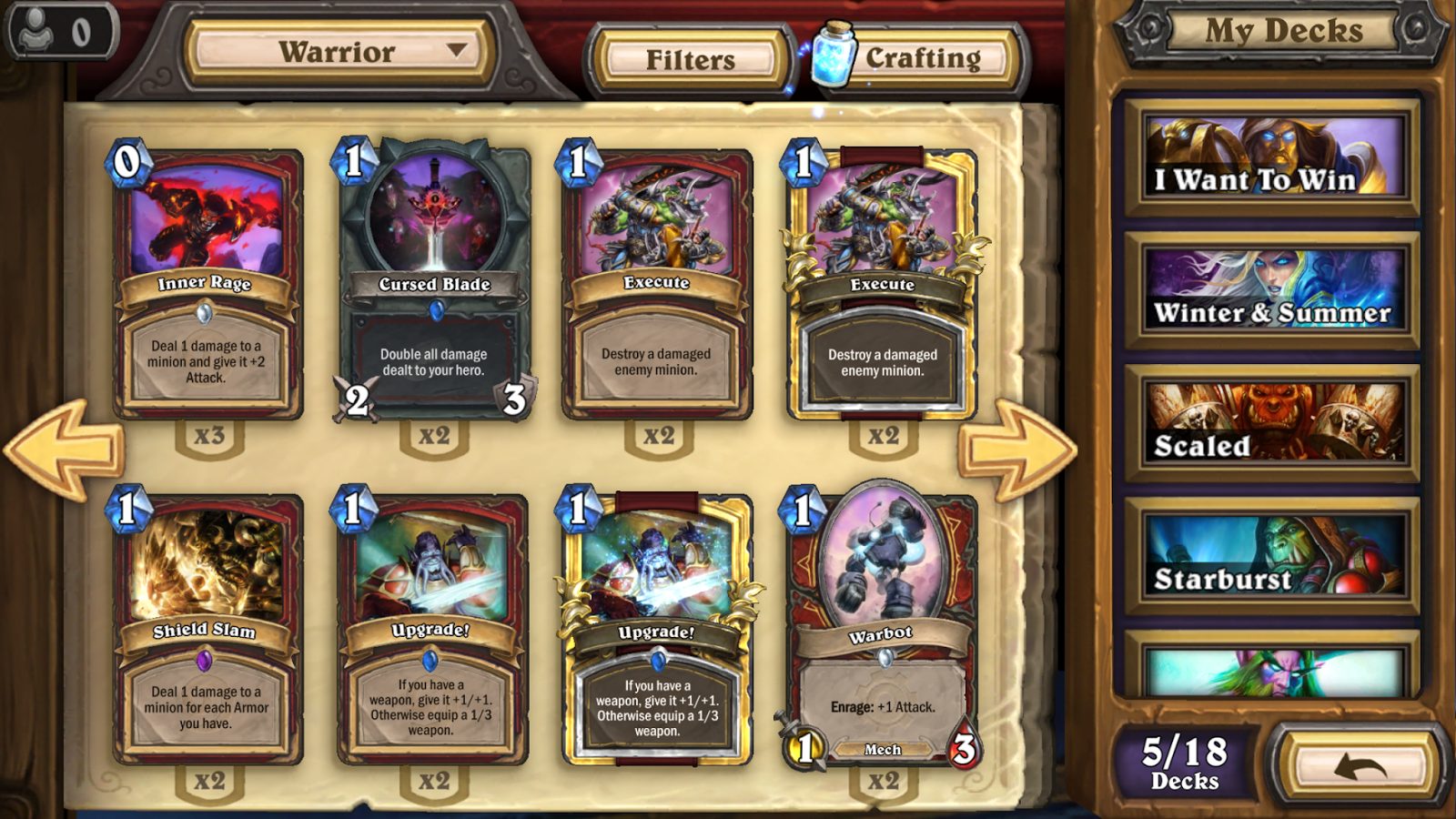
That something different, it turns out, was Hearthstone: Heroes of Warcraft. Hearthstone is a F2P card game that I’ve written about a lot here on The Impact Factor (my review, my joy of playing, card balance, new set reviews, & more). Though it started as a PC/Mac title, Hearthstone rapidly found its home in the mobile market. Smart design and good marketing made Hearthstone a fast success. Players and critics alike were raving about it. And Hearthstone was making a lot of money. Hearthstone was a huge contributor to Blizzard’s record 2015, with greatly increased revenues over the previous year. It’s been reported that Hearthstone pulls in more than $20 million a month. The bulk of that revenue? Players spending money buying packs. Hearthstone found a way to get players to spend money on a F2P game and not feel cheated.

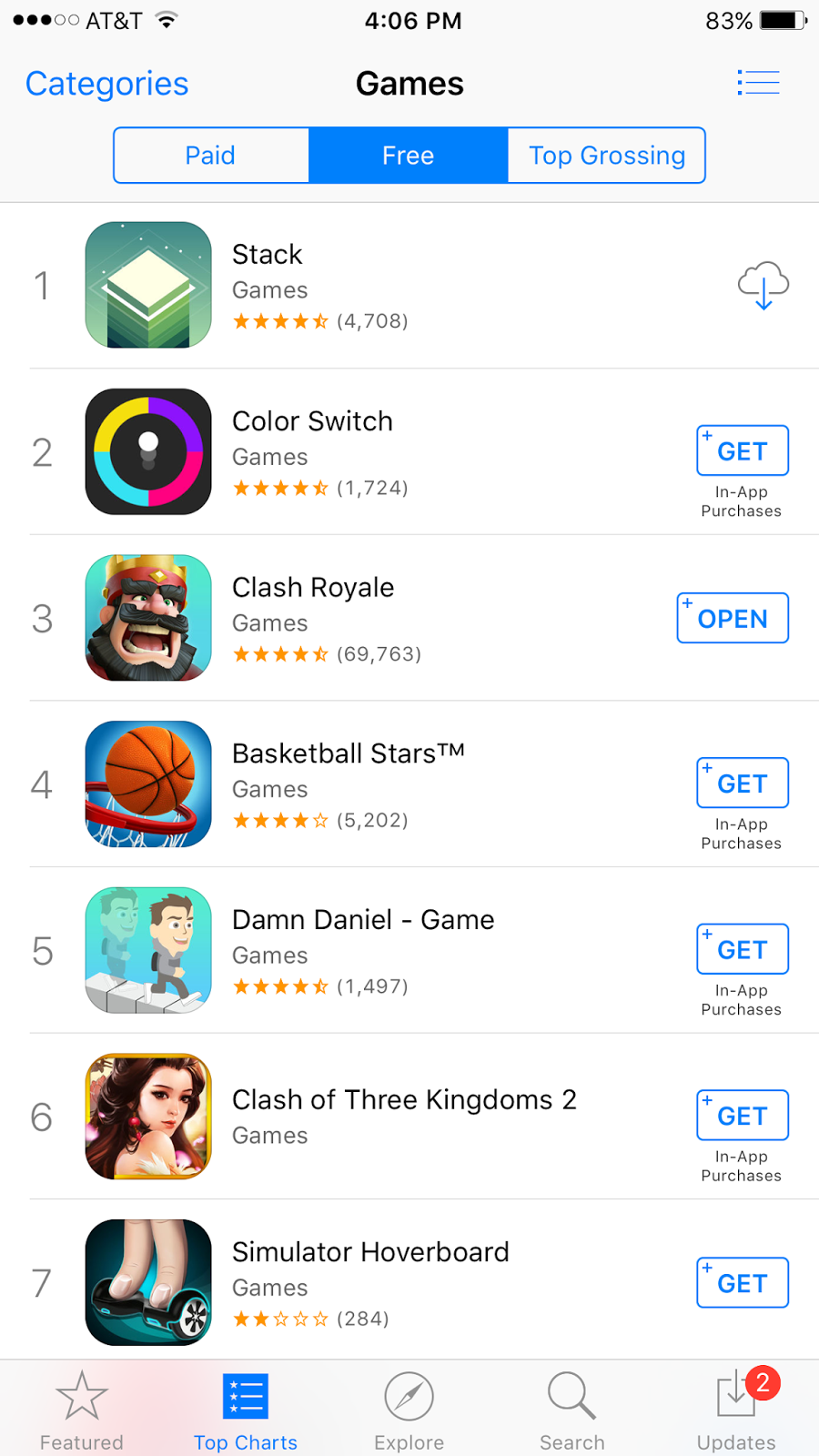
Hearthstone's unexpected success has shifted the F2P game space profoundly. We’re seeing an increasing number of games adopting Hearthstone’s pack-buying microtransactions to fuel their new titles. Some are card games, some just use the pack-buying content-collection loop to keep players invested. Duelyst adapts a card game into a grid-based tactical battle where your units are found by drawing cards out of your deck. Clash Royale is a tower defense slash real-time strategy fusion that has players drawing troop cards from a deck. Plants vs Zombies: Heroes is a new F2P card-based battle game using the beloved PvZ IP. Even Pokemon is jumping on board with Pokemon Co-Master, a F2P board game for smartphones where you can buy packs containing Pokemon figurines. And the list goes on.
It might not look like it, but Duelyst is a card game through and through.
Sprit orbs = card packs.
All of this got me this got me thinking: why are card packs such a successful monetization method for F2P games? What works about card packs that fails so miserably with premium currencies or time-walls? I have boiled it down to three reasons.

1. Perceived Value
The contentiousness surrounding microtransactions often centers around that fact that they are subtractive. The notion is that developers take aspects of their game and remove them from the free experience and charge for them. Or they put in mechanisms that prevent you from playing without spending money. Card packs work around this cleverly—the feel additive. You can play the base game, all modes and features, for free. Cracking packs and getting new cards simply changes the kind of experience you are having, rather than fill in the missing pieces. Hearthstone, Duelyst and Clash Royale alike provide the player with a decent suite of free cards to experiment with and build decks. For the best among these F2P card-based games, new cards augment an already stellar base game. Buying a pack is therefore valuable not because it completes your experience, but rather, gives you a new one.
New cards mean new experiences.
Further, the permanence of card acquisition goes a long way. Each new pack you open gives you something concrete, and something that could potentially affect the way you play the game for the duration of your experience. Spending real money on a card pack feels worthwhile because the cards are not a one-time thing. Your monetary investment doesn’t disappear after you spend it. Traditional microtransaction purchases are transient—getting past that annoying 12 hour wait by spending money doesn’t remove your future 12 hour waits. Whereas that card you got from the pack will be sitting in your collection forever. Your purchase has visual permanence. It’s easier to justify. It feels like a real, physical commodity.

2. Guaranteed Reward
Gambling taps into deeply rooted pleasure centers in the human brain. If history is any indication, promising big rewards for small investments is a great way to motivate people. And to get them to spend money. The problem with gambling, especially in the context of F2P microtransactions, is that you lose. A lot. And losing feels bad. Losing can feel like a complete waste of your money. In a casino, you can just leave or move to a different game. If you walk away from a video game that you feel has ripped you off, chances aren’t great that you’ll come back to be burned again. Navigating gambling-like F2P purchases while avoiding that loosing feeling is a tough one. In Puzzle and Dragons (a mobile F2P RPG-match 3 dungeon crawler), for example, the most powerful monsters in the game are obtained through playing a premium slot machine. To play the slot machine more than a few times every couple of weeks, you need to spend money. When you pull the handle and get a terrible result, it feels awful. Your investment feels worthless.

Card packs (partially) solve that problem. Like their real world counterparts, each pack is guaranteed to have certain kinds of cards within. In Hearthstone, each pack contains at least one rare. In Clash Royale, each chest tells you the gold & cards to expect. Opening a card pack isn’t exactly gambling, because you know you’re guaranteed to ‘win,’ it just how much you win that’s in question. It still feels bad to get the bare minimum rewards from a pack, but it never feels like a total loss. The best F2P card games have ways to make even the ‘bad’ rewards worth something. In Hearthstone, cards can be discarded for a resource used to craft any card you want. In Clash Royale, repeat cards can be used to level up your units or donated to members of your clan for gold. When you open a pack, you are guaranteed to use every single card you open in some way. Turns out that goes a long way.
All the rush of gambling with the reassurance
of guaranteed rewards.
3. The Joy of Collection
Opening packs of cards taps into ingrained parts of the human psyche about making progress, building up a collection, and getting the newest & best of whatever you care about. Each new pack you open could fill in that missing slot in your collection, or that missing slot in a deck you want to make. You’re one step closer to completing something that takes a lot of effort to finish. The joyous moment of when you open up a pack of cards should not be overlooked, either.  You get to see your rewards unfurl one by one, like opening presents on your birthday. The gradual reveal of a pack’s contents heightens tension for all subsequent cards and protracts out that high you feel when you get something new. A pack of five cards has five separate moments for you to be surprised, elated, or crushed. Each pack is a rollercoaster. It makes sense people want to pay to ride.
Pack opening is a one of the best rollercoasters I know.
However the future might look, F2P games with monetized cards packs are the new now. And it’s easy to see why. Just be careful out there. It is easy to get trapped in the endorphin vortex. I would know, I live there.